$1.44B in Fake Watches Seized: 2026 Forensic Guide

Mechanical movements and watch engineering
US Customs seized a record $1.44 billion in counterfeit watches in FY2024. As superclones defeat traditional verification, discover the advanced forensic tools—from XRF scanning to AI acoustic analysis—CBP uses to catch fakes, and learn how to protect yourself on the secondary market.
- Deep Dive: How Customs Actually Identifies a Fake—The Engineering Tells in 2026
- Context: A Flooded Market Meets Sharper Enforcement
- Sarah's Workbench: Forensic Analysis
- The Aftermath: What Happens If Customs Seizes Your Watch?
- Navigating the Market with Clear Eyes
- Related Reading
- High-Authority External References
The room is silent but for the metronomic tick of a tourbillon. My fingers, steadied by decades of adjusting hairsprings measured in microns, place a bridge. This is harmony. This is integrity. Now, picture a shipping container being opened to find 500 cheap quartz movements stamped “Perpetual” inside poorly cast steel shells. This is the $1.44 billion dissonance quantified by U.S. Customs and Border Protection for FY2024.
The headline is explosive, but the $8 million seized in Chicago in November 2025 shows the fight is escalating. Rolex and Audemars Piguet are prime targets. As an engineer who deals in truths defined by tolerances, let’s deconstruct what this means for you.
Deep Dive: How Customs Actually Identifies a Fake—The Engineering Tells in 2026
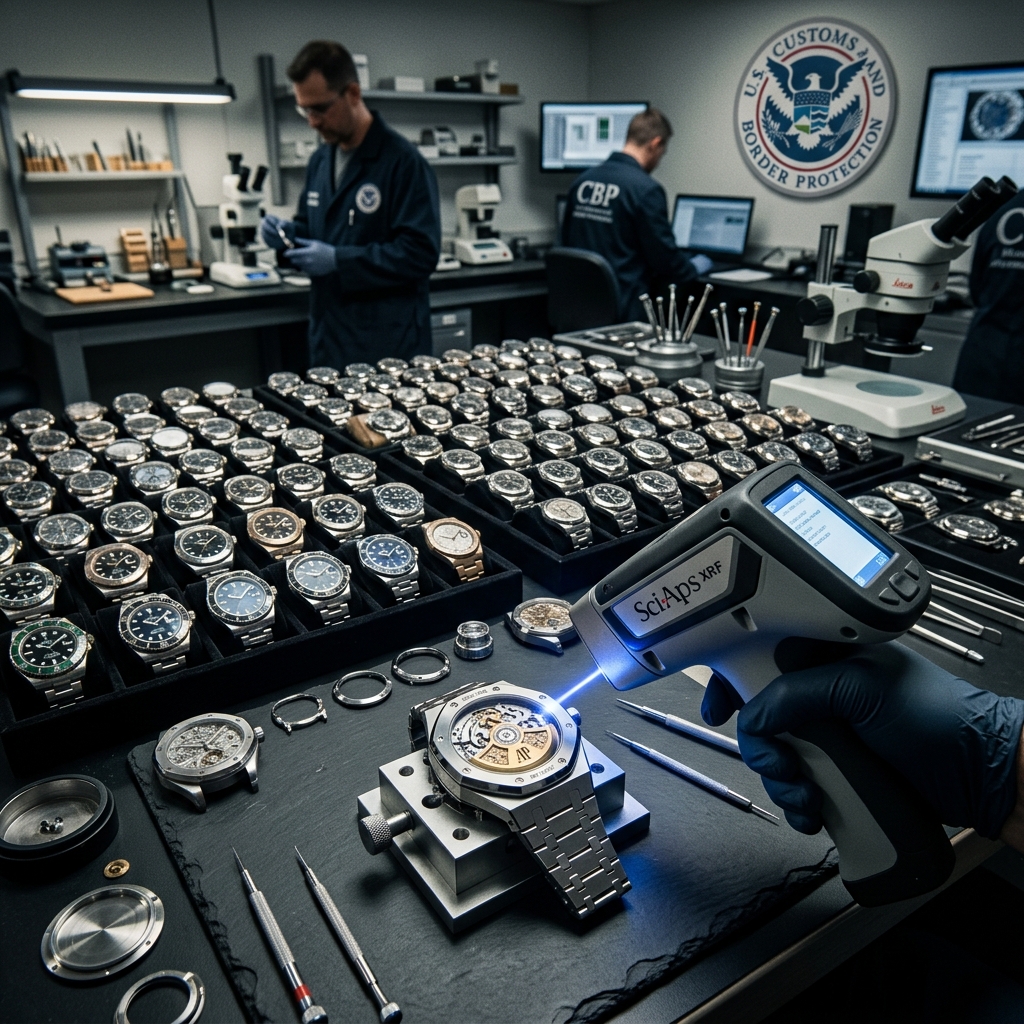
The $1.44 billion figure from Dunrite Global’s analysis of CBP’s FY2024 data is a shock, but the $8 million seized in a single Chicago operation in November 2025 is the real warning flare. The old playbook—checking the weight, the cyclops magnification—is obsolete. The latest “superclones” have solved those superficial issues. We’ve entered an arms race where authentication happens at the molecular and digital levels.
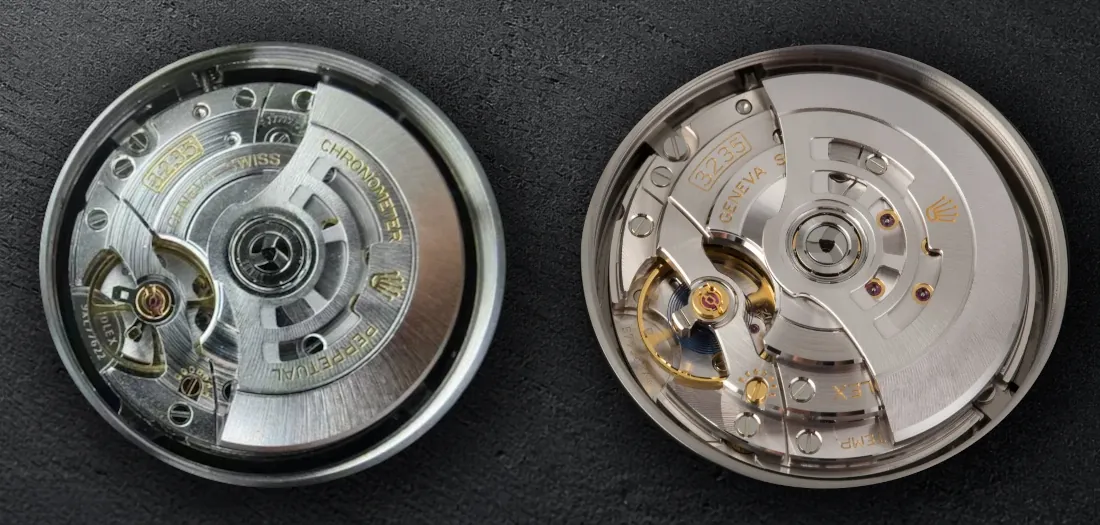
As a watchmaker, I used to say the movement never lies. Today, I must amend that: an unmodified movement never lies. The superclones disrupting CBP’s targeting use movements like the Shanghai 3235, a clone of the Rolex Caliber 3235 that replicates the free-sprung balance with a functional Parachrom hairspring. It will tick at 28,800 vph and show decent amplitude on a basic timegrapher. CBP’s response is a layered forensic protocol.
Layer 1: Instant Material Metrology with Handheld XRF Officers use handheld X-Ray Fluorescence (XRF) scanners. In seconds, they analyze the alloy composition.
- Rolex Oystersteel: A specific, proprietary blend of 904L stainless steel. Its XRF signature is unique. (For more on the materials that define a watch's value and authenticity, see our guide on What Affects the Price of a Watch?).
- Common Fake “904L”: Typically uses 316L steel. The XRF readout shows deficient nickel and molybdenum.
- Gold Alloys: 18k gold is not just 75% gold. Brands use precise proprietary alloys (e.g., Rolex’s 18k Everose gold with platinum). A fake uses a standard, cheaper mix.
This is a fundamental material failure for the counterfeit.
Layer 2: The Digital Ledger – Blockchain and NFTs The physical object is now just one component of authenticity. Brands are deploying digital passports. Rolex’s 2024 patent for a blockchain-based system and the LVMH AURA consortium are blueprints. Imagine a watch with an NFC chip. Tapping it pulls up a non-fungible token (NFT) on a blockchain—an immutable record. For CBP or a buyer, this is a binary check: does the digital twin exist? If the chip is missing or points to a duplicate ledger, the watch is condemned.
Layer 3: AI-Powered Visual & Acoustic Microscopy Superclone dials have perfected font depth and logo gloss. CBP labs are testing AI systems trained on thousands of images of genuine and fake components. These algorithms detect microscopic pattern deviations invisible to the human eye.
The most brilliant evolution is in acoustic analysis. Next-gen, AI-equipped timegraphers analyze the full acoustic signature of the movement. They map the harmonic profile of the gear train and balance wheel. A genuine Audemars Piguet Caliber 4302 has a specific acoustic “song” defined by its balance inertia and gear geometry. A clone movement, with different metallurgy and tolerances, has a distinct fingerprint. The machine hears what the most trained human ear might miss.
Practical Implications: For CBP and For You For CBP, this means a tiered approach: AI image scanning, XRF probing, then acoustic or digital verification.
For you, the enthusiast, it redefines due diligence:
- Pre-Purchase: A seller’s willingness to provide an XRF report or validate a blockchain record is becoming the new baseline. This underscores the critical importance of buying from reputable sources, a topic explored in our article on the Importance of Box and Papers When Buying a Luxury Watch.
- The Movement Shot: It’s still critical, but now you must look for evidence of modification. Superclone movements are often decorated after market installation. Check engraving depth; genuine is deep laser-etching, clones are often shallower.
- The New Reality: The existence of a perfect-looking movement does not guarantee authenticity. It must be accompanied by a verifiable digital history or pass material and acoustic tests.
Context: A Flooded Market Meets Sharper Enforcement
This record seizure is the collision of two trends:
- The Replica Market’s Technical Ascent: “Super clone” movements have become frighteningly good superficially.
- Enhanced Enforcement Protocols: CBP has upgraded its targeting algorithms and collaboration with the Luxury Law Consortium.
The secondary market for genuine watches is also affected. This seizure data is a stark reminder for any buyer: the risk of a “frankenwatch” (genuine case with fake movement) is non-zero. For those viewing watches as assets, understanding these risks is crucial, as discussed in our guide on Why Luxury Watches Are Still a Smart Investment.
Sarah's Workbench: Forensic Analysis
Pro Tip: The Caseback Tells All. The inside of the caseback is a confession booth. Genuine manufacturers laser-etch specific, crisp codes. Counterfeits often have shallow, acid-etched markings or show machining marks inconsistent with Swiss factory standards. A loupe here reveals the truth.
The Aftermath: What Happens If Customs Seizes Your Watch?
The procedure is mechanical.
- The Notice: You will receive a formal “Notice of Seizure and Proposed Forfeiture” (CBP Form 5955A).
- The Choice: You typically have 30 days.
- Abandon the Property: Sign a waiver; CBP destroys the watch.
- File a Petition: If you claim the watch is genuine, you must provide proof (receipt, papers, appraisals). Petitioning for a known counterfeit is perjury.
- Do Nothing: The watch is forfeited and destroyed.
- The Consequences: For a single replica, criminal charges are rare. However, the seizure is recorded. Repeated incidents can lead to fines and loss of Global Entry/TSA PreCheck privileges.
Navigating the Market with Clear Eyes
For the genuine enthusiast, this news underscores two non-negotiable rules:
- Buy the Seller, Then the Watch: Purchase from vetted, established grey market dealers with ironclad guarantees, like The Luxury Closet
- Demand a Movement Shot & Data: Any reputable seller will provide a clear movement image and, increasingly, willingness to discuss material or digital verification. Familiarizing yourself with the hallmarks of genuine pieces, like those detailed in our Rolex Collections Guide, provides a critical baseline for comparison.
The $1.44 billion figure measures the gap between true mechanical artistry and its deception. The counterfeit trade is built on tolerated flaws. As enthusiasts, our responsibility is to value the genuine engineering enough to protect it, starting with informed, ethical purchases. The harmony of a true mechanical movement depends on it.
Related Reading
- The Ultimate Guide to Watch Authentication: Box, Papers, and Beyond – Learn why documentation is your first line of defense in the secondary market.
- Are Luxury Watches a Smart Investment? Navigating Risk and Reward – Understand how authenticity and provenance directly impact a watch's financial value.
- Decoding Rolex: A Complete Guide to Every Iconic Collection – Know the genuine article inside and out to spot discrepancies.
- What Really Determines a Watch's Price? – Explore how materials, craftsmanship, and brand heritage create value—and what fakes lack.
High-Authority External References
- Rolex Official Materials: Rolex Oystersteel and Precious Metals – The definitive source on the proprietary 904L steel alloy and gold compositions used in genuine Rolex watches.
- Seiko Movement Specifications: Seiko 4R36 Movement Manual – Official technical documentation for a widely used mechanical movement, illustrating the level of detail found in genuine manufacturer specs.