How Important Are Box and Papers When Buying a Luxury Watch?

Watch collection building and market analysis
Box and papers can influence value and resale, but they’re not always essential. This buyer’s guide explains when documentation matters, when it doesn’t, and how to buy confidently in the secondary market.
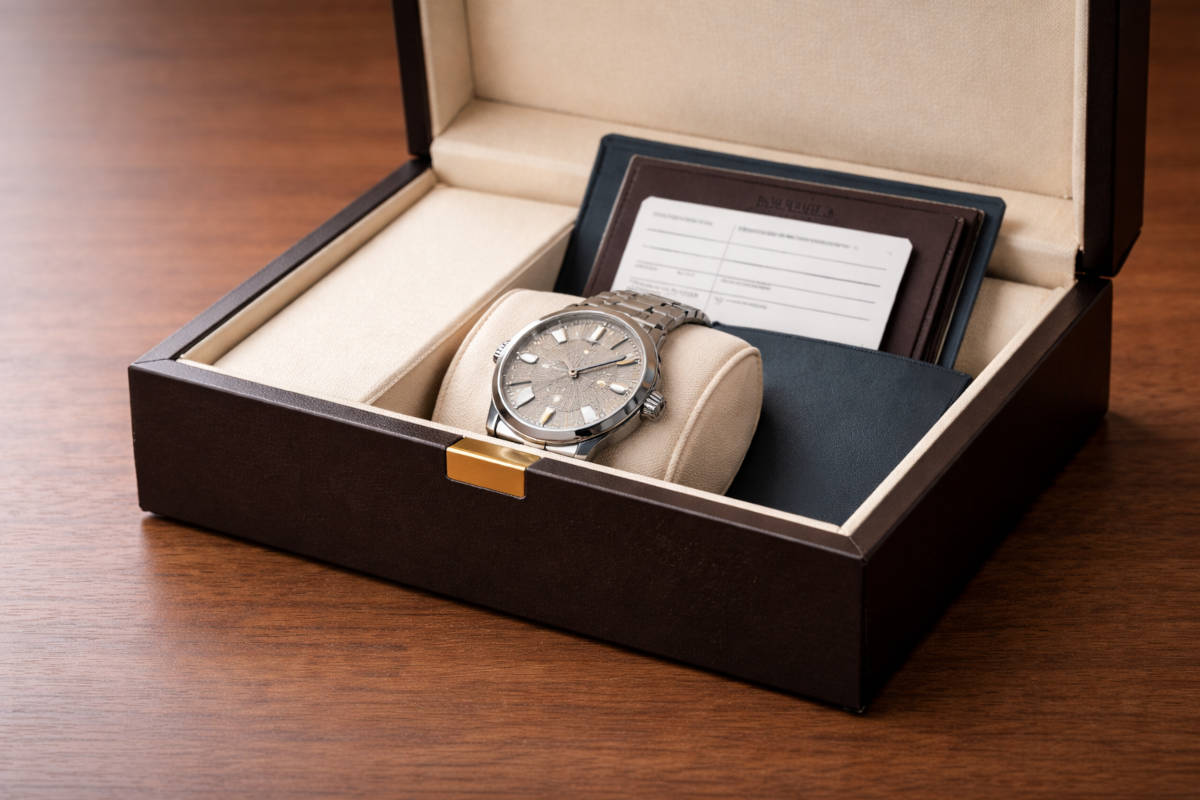
- How Important Are Box and Papers When Buying a Luxury Watch?
- What Are “Box and Papers” in Watch Collecting?
- Why Box and Papers Became Such a Big Deal
- Box vs Papers: They Are Not Equal
- How Box and Papers Affect Value, Risk, and Resale
- Modern Watches vs Vintage Watches: A Crucial Distinction
- Brand-by-Brand: Why Expectations Differ
- When Buying Without Box and Papers Makes Sense
- Buyer’s Checklist: What to Ask When Box and Papers Are Missing
- Full Set vs Watch-Only: How Buyers Should Think About Pricing
- Where Box and Papers Matter Most: Investment vs Ownership
- Final Verdict: Should Box and Papers Be a Dealbreaker?
- Buying From the Secondary Market: How Platforms Mitigate the Risk
- Box and Papers in Real Life: How Priorities Change Over Time
- Practical Scenarios: What Should You Do?
- Final Thoughts: Documentation Is a Tool, Not a Rule
How Important Are Box and Papers When Buying a Luxury Watch?
In the secondary market for luxury watches, few phrases carry as much weight as “full set.” Sellers highlight it. Buyers ask for it. Prices often reflect it. But for many people - especially those buying their first serious watch - the real importance of box and papers is surprisingly unclear.
Are they essential? Are they just nice to have? Or are they mostly a psychological comfort inflated by forum culture and resale obsession?
The honest answer is nuanced. Box and papers can matter a great deal - but not always, and not equally for every buyer, brand, or situation. Understanding when they matter, why they exist, and when they can safely be deprioritized is key to making a smart, confident purchase.
This guide approaches the topic as a buyer would: analytically, practically, and without mythology.
What Are “Box and Papers” in Watch Collecting?
Before discussing value and consequences, it’s important to be precise about terminology - because “box and papers” can mean different things depending on context, brand, and era.
What’s Typically Included in a “Full Set”
A watch sold as a full set usually includes:
- The original presentation box (inner box, sometimes outer box)
- Warranty card or certificate of origin
- Instruction manual
- Hang tags or seals (more common on modern pieces)
- Occasionally booklets, adjustment tools, or brand-specific accessories
Not all of these elements carry equal weight. From a market perspective, the papers - especially the warranty card - are significantly more important than the box.
Boxes are relatively easy to replace. Papers are not.
What “Papers” Actually Represent
Despite the name, papers are not just a receipt. They serve several critical functions:
-
Proof of origin
Warranty cards typically include:- Serial number
- Model reference
- Date of sale
- Authorized dealer stamp (on older examples)
This creates a documented link between the watch and the brand’s official sales network.
-
Authentication support
While papers alone do not guarantee authenticity, matching serial numbers between the watch and documentation significantly reduce risk - especially for brands heavily targeted by counterfeiters. -
Warranty eligibility
For modern watches still under manufacturer warranty, the original papers are often required to access that coverage.
It’s important to note what papers do not do: they do not automatically make a watch genuine, nor do they replace professional authentication. They are supporting evidence, not proof in isolation.
Why Box and Papers Became Such a Big Deal
The importance placed on box and papers is a relatively modern phenomenon.
Historically, watches were tools. Boxes were discarded. Papers were lost. Vintage icons from the 1950s and 1960s often survive without any documentation - and are still extremely valuable.
So why the shift?
The Rise of the Secondary Market
As luxury watches became financial assets as well as personal objects, buyers began to demand reassurance:
- Protection against counterfeits
- Easier resale
- Documentation for insurers
- Confidence when purchasing remotely
Box and papers became shorthand for safety.
Online Buying Changed Buyer Psychology
When buying in person, condition, movement, and seller reputation dominate. Online, buyers look for signals they can evaluate instantly. “Full set” is one of those signals.
It simplifies decision-making - even if it sometimes oversimplifies reality.
Box vs Papers: They Are Not Equal
One of the most common misconceptions among newer buyers is treating the box and papers as a single unit. In reality:
- Papers affect value and risk
- Boxes affect completeness and presentation
Losing original papers can materially impact resale value and buyer confidence. Losing the box usually does not - especially if the watch is otherwise correct and authenticated.
This distinction becomes critical later when we discuss pricing differences and when buying without box and papers can actually be a smart move.
At this stage, the key takeaway is simple:
Box and papers exist for practical reasons, but their importance depends heavily on how and why you’re buying the watch - not on collector dogma.
How Box and Papers Affect Value, Risk, and Resale
Once you move beyond definitions, the real question becomes practical: what actually changes when a watch comes with - or without - box and papers? The answer touches three areas that matter to buyers most: price, risk, and future flexibility.
For buyers who view a watch not just as an object to wear, but as an asset to hold or eventually resell, documentation becomes part of a broader value discussion. The presence of original box and papers often plays a role in how a watch performs on the secondary market — a topic explored in more depth in our guide to luxury watches as an investment.
Price Impact: How Much Value Is Really Lost?
There is no fixed percentage, but market patterns are clear.
For most modern luxury watches, missing box and papers typically results in:
- 5–15% lower market value for mainstream brands
- Higher discounts for hyped or investment-driven models
- Minimal impact on heavily worn or older watches
The key variable is buyer intent. A buyer who wants maximum resale flexibility will pay a premium for a full set. A buyer focused on wearing the watch often won’t.
Importantly, price differences are rarely linear. A watch missing papers but priced aggressively may be a better value than a full-set example priced optimistically.
Risk Perception vs Actual Risk
From a risk standpoint, papers reduce perceived risk, not always actual risk.
A watch without papers can still be:
- Fully authentic
- Properly serviced
- Traceable via serial number
Conversely, a watch with papers can still be problematic if:
- Papers are mismatched or altered
- The watch has replaced parts
- The seller’s credibility is weak
This is why experienced buyers prioritize seller reputation and authentication over documentation alone.
Resale Liquidity: The Hidden Advantage of a Full Set
Where box and papers truly shine is resale ease.
A full-set watch:
- Attracts more buyers
- Sells faster
- Requires less explanation
- Performs better on large marketplaces
If you expect to resell within a short time frame - or trade up frequently - documentation becomes a practical asset, not just a formality.
Modern Watches vs Vintage Watches: A Crucial Distinction
One of the biggest mistakes buyers make is applying modern standards to vintage pieces.
Modern Watches (Roughly Last 20 Years)
For contemporary watches, box and papers matter more because:
- Brands issue standardized warranty cards
- Serial numbers are easily cross-referenced
- Buyers expect documentation as part of the purchase
A modern Rolex, Omega, or Cartier without papers raises questions - even if those questions can often be answered.
Vintage Watches: Different Rules Entirely
In vintage collecting, originality of the watch itself matters far more than documentation.
Many vintage icons:
- Were sold without durable boxes
- Changed hands multiple times
- Lost papers decades ago
Here, value is driven by:
- Dial condition
- Case integrity
- Movement correctness
- Provenance (if known)
Ironically, original box and papers on a truly vintage watch can add significant value - but their absence is normal, not a red flag.
Brand-by-Brand: Why Expectations Differ
Not all brands are judged equally when it comes to documentation.
Rolex: Market Expectations Are High
Rolex has trained buyers to expect completeness. As a result:
- Full sets command noticeable premiums
- Papers help verify production year
- Resale markets strongly favor documented pieces
That said, Rolex serial numbers can often be verified through service history, making reputable sellers critical.
Patek Philippe & High Horology
For brands like Patek Philippe:
- Papers are closely tied to provenance
- Archives and extract services exist
- Collectors care deeply about traceability
Here, documentation is part of the watch’s identity, not just an accessory.
Omega, Cartier, and Wear-Focused Brands
These brands sit in a more practical middle ground:
- Papers help but are not decisive
- Condition and service history matter more
- Pricing differences without papers are often modest
For buyers planning to wear the watch regularly, missing documentation is rarely a dealbreaker.
When Buying Without Box and Papers Makes Sense
Despite common advice, buying a watch without box and papers can be a strategic decision, especially for certain buyers.
First-Time Luxury Buyers
If you’re entering the luxury watch world:
- You may benefit more from a lower entry price
- You’re less likely to resell quickly
- Wearing enjoyment outweighs future liquidity
In these cases, saving money on a watch-only example can be sensible.
Trusted Sellers and Authentication
Buying without papers is far safer when:
- The seller is established and reputable
- The watch is independently authenticated
- A return policy is in place
This is where professional marketplaces and vetted dealers become essential.
The importance of box and papers ultimately comes down to intent. They matter most when a watch is treated as a financial instrument - and less when it’s treated as what it was always meant to be: something worn on the wrist.
Buyer’s Checklist: What to Ask When Box and Papers Are Missing
When a luxury watch is offered without its original box and papers, the responsibility shifts to the buyer to ask smarter questions. This isn’t about suspicion - it’s about replacing missing documentation with better information.
Serial Numbers and Reference Consistency
The first non-negotiable step is verifying that the watch’s serial number and reference are correct and intact.
A serious seller should be able to:
- Provide clear photos of the serial and reference numbers
- Confirm they have not been altered, polished away, or re-engraved
- Explain where the watch was originally purchased, if known
On many modern watches, serial numbers can be cross-checked through brand service centers during routine maintenance. While brands may not disclose ownership history, they can often confirm whether a watch has been flagged or previously serviced.
Service History: Often More Valuable Than Papers
From a practical ownership standpoint, service documentation can matter more than original papers.
A recently serviced watch:
- Is mechanically sound
- Has verified components
- Often comes with a service warranty
For buyers planning to wear the watch regularly, a documented service from a reputable watchmaker - or the brand itself - can offset the absence of original warranty papers entirely.
Independent Authentication
In today’s market, professional authentication has become a powerful substitute for missing papers.
Look for:
- Third-party authentication services
- Dealer-backed authenticity guarantees
- Detailed condition reports
Established platforms specializing in pre-owned luxury watches build their reputation on trust and verification. In many cases, this offers more real-world security than decades-old papers of uncertain origin.
Full Set vs Watch-Only: How Buyers Should Think About Pricing
One of the most useful mental shifts a buyer can make is reframing the question from “Is it missing box and papers?” to “Is it priced correctly?”
When a Discount Is Justified
A meaningful price adjustment is reasonable when:
- The watch is modern
- The model is widely traded
- Comparable full-set examples are readily available
In these cases, missing papers should translate into a measurable discount - not vague assurances.
When the Discount Doesn’t Matter
Conversely, the absence of box and papers is far less important when:
- The watch is older or vintage
- The model is uncommon
- Condition and originality are exceptional
Paying slightly more for a great example without papers is often wiser than chasing a mediocre full set.
Where Box and Papers Matter Most: Investment vs Ownership
This topic intersects directly with the idea of watches as investments. If your goal includes value retention or appreciation, documentation becomes more important.
For readers interested in the financial side of watch ownership, this is explored in more depth in our guide to luxury watches as investments, which explains how liquidity, documentation, and market timing interact.
That said, even in investment-oriented collecting, box and papers are only one part of the equation. Rarity, demand, and originality still dominate long-term performance.
Final Verdict: Should Box and Papers Be a Dealbreaker?
For most buyers, the answer is no - but they should influence the decision.
- If you value flexibility, easy resale, and market acceptance, prioritize full sets.
- If you value wearing the watch, understanding its mechanics, and paying a fair price, documentation is secondary.
- If you’re buying from a trusted source with authentication and service transparency, missing papers are rarely a reason to walk away.
The most confident luxury watch purchases aren’t driven by fear of missing paperwork - they’re driven by knowledge.
Box and papers add comfort. They add liquidity. They add completeness.
But they don’t define the watch itself.
Buying From the Secondary Market: How Platforms Mitigate the Risk
For buyers who want both value and peace of mind, where you buy often matters more than what comes with the watch.
Reputable secondary-market platforms have evolved precisely because box and papers are not always available - and because buyers still need confidence.
Authentication as the New Standard
Well-established luxury resale platforms now rely on layered verification rather than documentation alone. This typically includes:
- In-house watchmakers inspecting movements and components
- Serial number verification and brand consistency checks
- Condition grading and disclosure of replaced parts
- Seller vetting and fraud prevention systems
In many cases, this process is more reliable than original papers, especially when those papers are decades old or detached from the watch’s ownership history.
Warranty Substitutes and Buyer Protection
Another overlooked advantage of professional platforms is post-purchase protection.
Some offer:
- Limited mechanical warranties
- Return windows after delivery
- Documentation of authenticity for insurance purposes
For buyers who intend to wear their watch regularly, these protections can outweigh the absence of original brand paperwork entirely.
This is also where marketplaces like The Luxury Closet become relevant for buyers who want access to authenticated watches - both full sets and watch-only examples - without navigating the risks of private transactions.
Box and Papers in Real Life: How Priorities Change Over Time
One interesting pattern among experienced collectors is how their attitude toward box and papers evolves.
Early on, buyers tend to:
- Focus heavily on completeness
- Fear making a “mistake”
- Anchor decisions to resale value
Over time, priorities often shift toward:
- Condition and originality
- Wearing comfort and enjoyment
- Trust in specific sellers or watchmakers
This doesn’t mean box and papers stop mattering - but they stop being the starting point of the decision.
Many seasoned collectors own a mix:
- Full-set pieces they plan to keep pristine
- Watch-only pieces chosen purely for wear
Both can coexist in a thoughtful collection.
Practical Scenarios: What Should You Do?
Rather than treating box and papers as a universal rule, it’s more useful to match them to your situation.
You Should Prioritize Box and Papers If:
- You plan to resell or trade frequently
- You’re buying a highly liquid modern model
- You want maximum market acceptance
- The price difference is reasonable
You Can Safely Compromise If:
- You’re buying your first luxury watch
- You intend to keep it long-term
- The seller provides authentication and transparency
- The discount reflects the missing documentation
Thinking this way reframes the choice from “right vs wrong” to “appropriate vs unnecessary.”
Final Thoughts: Documentation Is a Tool, Not a Rule
Box and papers are valuable - but they are not sacred.
They:
- Reduce friction
- Increase liquidity
- Add reassurance
They do not:
- Guarantee authenticity
- Replace expertise
- Determine whether a watch is worth owning
For informed buyers, documentation should support the decision - not dominate it.
If you understand the watch, trust the seller, and pay a fair price, buying without box and papers can be a rational, even advantageous choice.
In the end, the most important thing isn’t what comes with the watch - it’s whether the watch makes sense for you.