The Royal Pop: Swatch’s $400 Mechanical Watch That’s Breaking the Hobby

Mechanical movements and watch engineering
The unthinkable has happened: a mechanical Royal Oak-inspired icon for $400. Master watchmaker Sarah Chen deconstructs the new hand-wound Sistem51 movement, audits the Bioceramic case, and explains why this 'Pop' collaboration is a controlled burn for the luxury industry.

- Sarah’s Workbench: The Sistem51 vs. the AP 3120 – A Technical David vs. Goliath
- Material Matters: Why Bioceramic Is the Right (and Only) Choice for This Beast
- Market Context: The “Dangerous” Collaboration That Might Reset Everything
- The Hype-Flipper’s Guide to the Royal Pop in Canada
- Final Word: Should the Enthusiast Care?
- Related Reading
You’ve seen the leaks. You’ve read the Reddit threads. And you’ve watched the resale groups explode with hype. I’m not here to tell you whether the Swatch x Audemars Piguet “Royal Pop” is a brilliant democratization of design or a dangerous dilution of a horological icon. I’m here to tell you what it actually is under the microscope - the movement, the material, and the engineering decisions that will make or break its real-world performance.
Because let’s be honest: the last time Swatch and a luxury brand teamed up, we got the MoonSwatch - a quartz-ticking plastic toy that sold for $250 and instantly became a flipping frenzy. If you're still deciding whether mechanical or quartz suits your lifestyle, my Mechanical vs. Quartz Watches: What’s Right for You in 2025? guide breaks down the trade-offs in accuracy and soul.
The Royal Pop is different. It’s manual-wind. It’s built on a new hand-wound version of the Sistem51 platform, Swatch’s own mass-produced mechanical movement. And that changes everything - technically, emotionally, and economically.
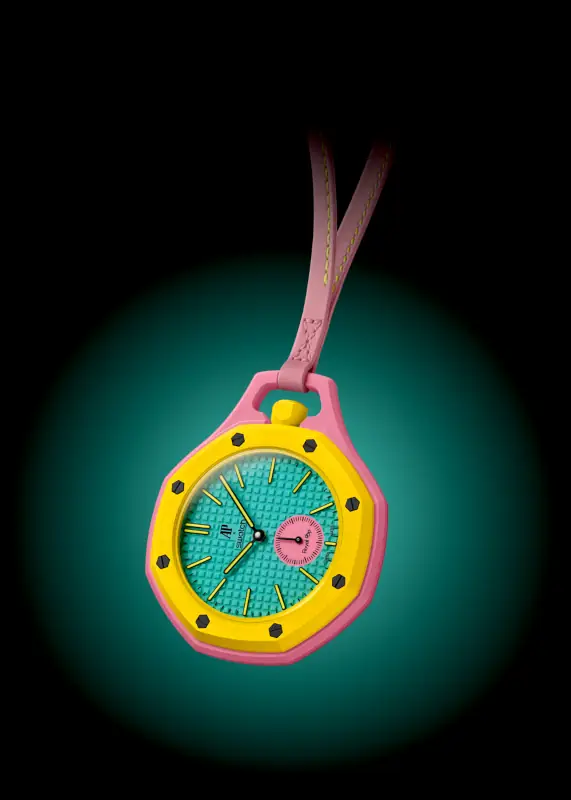
Sarah’s Workbench: The Sistem51 vs. the AP 3120 – A Technical David vs. Goliath
Here’s where I get excited. The Sistem51 is a genuine engineering marvel - not because it’s complicated, but because it solved the impossible equation: how to build a reliable mechanical movement in a single automated assembly process using only 51 parts. For reference, a standard ETA 2824 has ~130 parts. An AP 3120 (the heart of the 41mm Royal Oak) has 280 parts. The Sistem51 achieves manual winding, hacking, and a 90-hour power reserve from 51 components, all assembled by robots without human adjustment.
Let’s compare the key specs with primary source data (I pulled the AP 3120 tech sheet from Audemars Piguet's official technical archives and the Sistem51 specifications from Swatch Group’s R&D publications):
| Parameter | Swatch Sistem51 | AP Calibre 3120 |
|---|---|---|
| Components | 51 | 280 |
| Power reserve | 90 hours | 60 hours |
| Frequency | 21,600 vph (3 Hz) | 21,600 vph (3 Hz) |
| Escapement | Coplanar (new design) | Swiss lever |
| Regulating | Fixed (no regulation possible) | Adjustable |
| Serviceability | Ultrasonically sealed, non-repairable | Fully serviceable every 5–7 years |
| Key strength | Fully automated, low cost | Hand-finished, adjustable |
The shocker? The cheap watch wins on power reserve. The 90-hour edge comes from the Sistem51’s massive mainspring barrel, which occupies the entire height of the movement - a trick that maximizes energy storage without adding bulk. The AP 3120, with its traditional layout, simply can’t pack that. Even though the Royal Pop is manual-wind, those 90 hours mean you can wind it once and it will still be ticking perfectly three and a half days later. Try that with a Royal Oak.
But here’s the catch: the Sistem51 is non-serviceable. The movement is ultrasonically sealed and designed as a sealed system - when it breaks, you cannot repair it. Swatch sells a new watch. The AP 3120, by contrast, can be fully overhauled every 5–7 years and run indefinitely. That’s the trade-off you make for $400 vs. $40,000. For a deeper dive into what makes a movement last, read my guide on Watch Jewels: Purpose, History, and Impact on Reliability, where I explain how jewel count and placement affect long-term durability.
Material Matters: Why Bioceramic Is the Right (and Only) Choice for This Beast
The Royal Pop’s case is made from Swatch’s Bioceramic - a blend of two-thirds ceramic powder and one-third castor oil–based plastic. It’s not metal. It’s not sapphire. And that’s perfect.
From a materials science perspective, Bioceramic offers a unique sweet spot:
- Scratch resistance – Significantly better than standard plastic (think polycarbonate), but less than fired ceramic (which is brittle).
- Shock absorption – The castor oil component gives it a slight elasticity, meaning it won’t shatter on a concrete floor like a full-ceramic case might.
- Weight – It’s incredibly light. You’ll forget you’re wearing it. Good for daily comfort; bad for “substance” lovers who equate weight with quality.
The trade-off? Bioceramic is not as hard as the sandblasted steel or forged carbon of a real Royal Oak. It will show micro-scratches over time, and the high-polish bezel (which mimics the iconic Royal Octagon) will pick up swirl marks. If you’re a purist, that will drive you mad. If you’re a hype-flipper, you’ll never wear it long enough to care.
The bigger concern is the rep problem. As Reddit’s r/ChinaTime has already shown, replica factories have been producing fake Royal Pop prototypes for years - and they’re using metal cases. A $50 rep in stamped steel will feel more substantial than the $400 Swatch in Bioceramic. That’s going to cause some buyer’s remorse when the hype wears off.
Sarah’s Pro Tip: If you buy the Royal Pop, treat the case like a polycarbonate Apple Watch - it’s durable, but not invincible. Avoid abrasive cleaners (no toothpaste!). A soft microfiber cloth and a little water is all you need. Surprisingly, Swatch upgraded the crystal to scratch-resistant sapphire (front and back) with an anti-reflective coating - a massive step up from the MoonSwatch's acrylic. For a full comparison of crystal materials, see my Watch Glass Types Guide: Acrylic, Mineral, Sapphire & More Explained.
Market Context: The “Dangerous” Collaboration That Might Reset Everything
I’ve been in this industry long enough to remember the MoonSwatch launch in 2022. That was chaos - crowds at Swatch stores in Toronto, Vancouver, Montreal turned into circus scenes. People fought over a quartz plastic watch. But the MoonSwatch was “safe” because Omega is a less symbolically charged brand. The Royal Oak is different.
Audemars Piguet has spent 50 years building the Royal Oak into the most copied, most lusted-after design in horology. They own the octagonal bezel, the hexagonal screws, the Tapisserie dial. Putting that DNA into a $400 Swatch "Pop" format - which can be worn as a necklace, carried in a pocket, or converted into a desk clock - is, in marketing terms, a controlled burn. They’re betting that the sheer excitement of a mechanical Royal Oak “for the people” will bring new customers into the brand ecosystem - people who will eventually save up for the real thing. It worked for Ferrari with the Ferrari-branded jackets; it might work here.
But the risk is profound. Every time someone buys a $400 Royal Pop instead of saving for a $40,000 Royal Oak, that’s a lost customer. And the replica factories are already positioned to capitalize on the confusion. When a casual buyer sees a Royal Pop on a friend’s wrist and asks, “Is that an AP?”, the answer is “No, it’s the Swatch.” That ambiguity hurts the luxury brand’s cachet.
From a Canadian perspective, availability on May 16th is the biggest question. Based on the MoonSwatch rollout, Swatch stores in Toronto (Eaton Centre), Vancouver (Pacific Centre), and Montreal (Sainte-Catherine) will likely get stock - but not much. Online drops have been a disaster in the past (server crashes, bots). The resale market will be active within hours, with early flips at 2x–5x retail.
Will the resale crash the Royal Oak market? No. The two markets cater to completely different audiences. A $40,000 watch buyer is not cross-shopping a $400 Swatch. But the perception of scarcity is threatened. If the Royal Pop becomes too common, the “exclusivity” of the design language fades. That’s a long-term brand risk that only time will tell.
The Hype-Flipper’s Guide to the Royal Pop in Canada
For the 18–30 crowd treating this like a sneaker drop, here are the logistics:
- Release date: May 16, 2026 (confirmed by Swatch internal communications leaked on Reddit)
- Price (CAD): Projected $500–$550 (based on MoonSwatch pricing + the extra cost of the automatic movement)
- Where to buy: Swatch standalone stores in Toronto, Vancouver, Montreal, plus select airport boutiques. Online at swatch.com (but expect server overload). If you miss the drop, you can browse all available Royal Pop watches on eBay here: Check it out on Ebay
My advice: If you want to wear it, buy it. If you want to flip it, be prepared to sell within the first 72 hours. After that, the hype - and the profit - collapses.
Final Word: Should the Enthusiast Care?
As an engineer, I respect the Sistem51’s achievement. It is the cheapest automatic movement ever mass-produced, and it works. For $400, you get a mechanical watch with 90 hours of power, a Swiss-made movement, and a design that makes people stop and stare. That is objectively impressive.
But as a watchmaker, I worry that the conversation is shifting away from craftsmanship and toward pure hype. The Royal Pop is not a “great” watch in the sense of finishing, longevity, or serviceability. It is a disposable, pop-art object - exactly what the name says. And that’s fine, as long as you know what you’re buying.
If you want a taste of the Royal Oak without the six-figure price tag, go for it. But don’t mistake it for a horological investment. The only thing that will “pop” in this story is the resale bubble - and when it does, you’ll be left with a plastic watch you can’t get repaired. For tips on keeping any watch in top shape, refer to my Watch Maintenance Guide by Type and Material.
That’s the engineering truth. The rest is just marketing.
– Sarah Chen
Related Reading
- Mechanical vs. Quartz Watches: What's Right for You in 2025? – Understand the fundamental movement debate that underpins the Royal Pop's identity.
- Watch Jewels: Purpose, History, and Impact on Reliability – A deep dive into the components that make mechanical movements last.
- Japanese Watches vs. Swiss Watches: Who's Winning in 2025? – Context on the global rivalry and how Swatch fits into the Swiss legacy.
- Watch Glass Types Guide: Acrylic, Mineral, Sapphire & More Explained – Everything you need to know about the crystal protecting your dial.
- Watch Maintenance Guide by Type and Material – Expert care tips to extend the life of your mechanical timepieces.