Rolex Watch Bracelets Explained: Oyster, Jubilee, President & More

Vintage watch restoration and historical research
Rolex bracelets are more than design details—they define comfort, durability, and character. This buyer’s guide explains Oyster, Jubilee, and President bracelets, comparing history, wearability, and real-world ownership considerations to help you choose the right Rolex for your wrist.
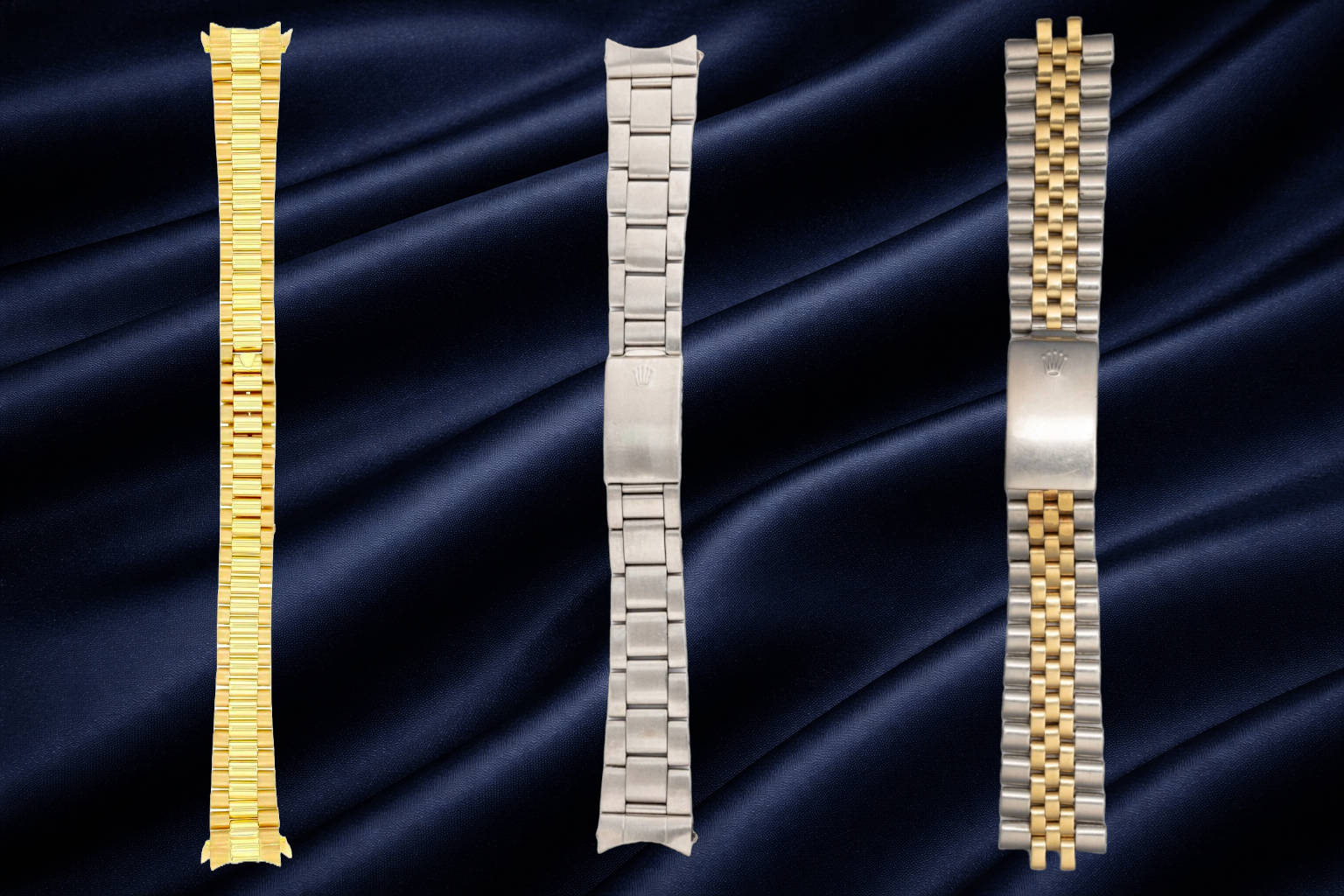
- Why Rolex Bracelets Matter More Than You Think
- A Brief History of Rolex Bracelet Design
- The Oyster Bracelet - Rolex’s Most Versatile Design
- The Jubilee Bracelet - Comfort Meets Elegance
- The President Bracelet - Exclusivity and Status
- Other Rolex Bracelet Types You Should Know
- Oyster vs Jubilee vs President - A Practical Comparison
- How to Choose the Right Rolex Bracelet
- Collector Insight: What Enthusiasts Really Prefer
- Buying Advice & Final Thoughts
When people talk about Rolex watches, the conversation usually starts with cases, movements, and bezels. Yet among experienced buyers and collectors, the bracelet often plays an equally important role. On a Rolex, the bracelet is not an afterthought or a simple attachment - it is a core part of the watch’s identity, comfort, and long-term value.
For buyers deciding between similar Rolex models, bracelet choice can be the deciding factor. An Oyster and a Jubilee may share the same watch head, but they deliver very different wearing experiences, aesthetics, and even market perception. Understanding these differences is essential if you want to choose a Rolex you will genuinely enjoy living with, not just admiring in photos.
This guide explains Rolex’s main bracelet types - Oyster, Jubilee, President, and a few lesser-known alternatives - from a buyer’s perspective. We’ll look at how they evolved, how they differ technically, and how to decide which one makes the most sense for your wrist and lifestyle.
Why Rolex Bracelets Matter More Than You Think
Rolex bracelets are designed as integrated components, not interchangeable accessories. The case, bracelet, clasp, and end links are engineered together to create a balanced whole. This approach affects everything from weight distribution to how the watch sits on the wrist over long periods of wear.
Comfort is one of the biggest factors. A well-designed bracelet reduces pressure points, adapts to wrist movement, and maintains stability throughout the day. Rolex invests heavily in link geometry, tolerances, and clasp systems to achieve this. Features such as solid end links, precise machining, and on-the-fly micro-adjustments are not just technical flexes - they are practical advantages you feel every time you wear the watch.
Bracelets also influence durability and longevity. Modern Rolex bracelets are built to last decades with proper care. Older folded or riveted bracelets, while charming, stretch over time and require more maintenance. Buyers choosing between vintage and modern Rolex watches often underestimate how much the bracelet affects daily usability.
Finally, bracelet choice impacts resale and collectability. Certain bracelet and model combinations are more desirable on the secondary market. For example, sports models offered on both Oyster and Jubilee bracelets can command different prices depending on buyer demand and production trends. Choosing the “right” bracelet can therefore be both a comfort decision and a financial one.
A Brief History of Rolex Bracelet Design
Early Riveted and Folded Bracelets
Rolex’s earliest metal bracelets were functional, lightweight, and far simpler than today’s designs. Riveted bracelets from the mid-20th century are easily recognizable by their visible side rivets and hollow links. Later folded-link bracelets improved strength but remained relatively light and flexible.
From a modern buyer’s standpoint, these bracelets feel delicate compared to current standards. However, collectors value them for their historical authenticity and period-correct appearance. They also explain why vintage Rolex watches often feel very different on the wrist than their modern counterparts, even when case sizes are similar.
The Shift to Solid-Link Construction
The major turning point came when Rolex transitioned to solid-link bracelets and solid end links. This shift dramatically increased weight, rigidity, and overall perceived quality. Stretch became far less of an issue, tolerances tightened, and bracelets began to feel like permanent components rather than wearable consumables.
This evolution aligns closely with Rolex’s broader move toward industrial precision and longevity. For buyers today, it means that modern Rolex bracelets are among the most robust in the luxury watch industry, capable of handling daily wear without feeling flimsy or wearing out prematurely.
This historical context matters because it explains why bracelet discussions are so prominent in Rolex buying decisions. What started as a practical necessity has become one of the brand’s defining strengths - and one of the clearest differentiators between models that may otherwise appear very similar.
The Oyster Bracelet - Rolex’s Most Versatile Design
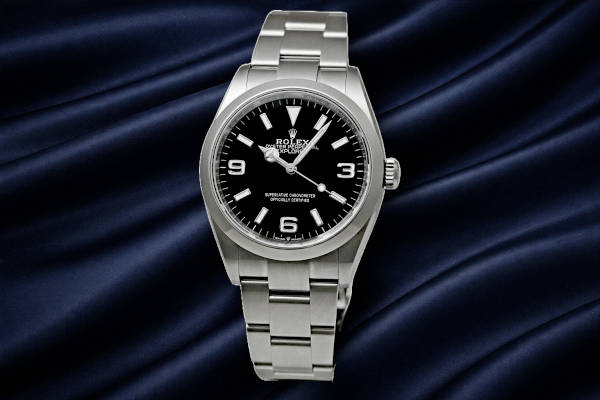
If there is one bracelet that defines Rolex in the modern era, it is the Oyster. Introduced in the late 1930s, the Oyster bracelet was designed to match the brand’s growing focus on durability, water resistance, and everyday usability. Today, it remains the most widely used Rolex bracelet and the default choice for many buyers.
At its core, the Oyster bracelet is a three-link design with flat, broad links that create a clean, purposeful look. This simplicity is intentional. The bracelet is meant to complement the watch head without drawing attention away from it, making it equally at home on a tool watch or a more understated everyday Rolex.
Design, Construction, and Materials
Modern Oyster bracelets are built with solid links and solid end links, contributing to their substantial feel on the wrist. Rolex manufactures them in several materials, depending on the model:
- Oystersteel for stainless steel sports and professional models
- Rolesor (steel and gold) for two-tone watches
- 18k gold or platinum for select precious-metal references
The flat link surfaces give the Oyster bracelet a more structured appearance compared to multi-link designs. This structure translates into a sense of stability when worn. For buyers who prefer a watch that feels planted and secure, the Oyster often delivers that impression immediately.
Another technical advantage is how well the Oyster bracelet integrates with Rolex cases. The end links are shaped precisely to eliminate gaps, creating a seamless transition from case to bracelet. This integration is one reason Rolex watches tend to feel more cohesive than many competitors, even at similar price points.
Oyster Bracelet on Modern Rolex Models
The Oyster bracelet is most closely associated with Rolex’s professional and sports watches. Models such as the Submariner, Explorer, Oyster Perpetual, Sea-Dweller, and many GMT-Master II references are commonly offered on the Oyster.
For buyers, this pairing makes sense. The Oyster bracelet reinforces the functional character of these watches. On a Submariner, for example, it visually anchors the watch as a true dive instrument rather than a dressy sports hybrid. On simpler models like the Oyster Perpetual, it adds just enough presence without pushing the watch into overtly sporty territory.
Rolex has also used the Oyster bracelet on certain Datejust configurations, particularly those aimed at buyers who want a more understated or versatile look. In these cases, bracelet choice alone can dramatically change how formal or casual the watch feels.
Comfort, Durability, and the Glidelock System
From a practical standpoint, comfort is where the Oyster bracelet often wins over buyers who plan to wear their watch daily. The broader links distribute weight evenly across the wrist, reducing pressure points. This is especially noticeable on heavier watches, where a less substantial bracelet might feel top-heavy.
Durability is another strong point. The Oyster bracelet resists twisting and deformation, and its solid construction minimizes long-term stretch. For buyers concerned about longevity, especially in pre-owned purchases, an Oyster bracelet is generally a safer bet.
On many professional models, the Oyster bracelet is paired with Rolex’s Glidelock clasp system. Glidelock allows tool-free micro-adjustments in small increments, making it easy to adapt to wrist swelling throughout the day or over different seasons. This feature alone can be a deciding factor for buyers choosing between bracelet types, particularly those living in variable climates or wearing their watch for extended periods.
Not all Oyster bracelets include Glidelock - some use the Easylink extension instead - but even these offer a level of adjustability that enhances real-world comfort.
In short, the Oyster bracelet is the most versatile option in Rolex’s lineup. It favors function over flair, comfort over ornamentation, and durability over delicacy. For many buyers, especially first-time Rolex owners, it represents the safest and most universally satisfying choice.
| Store | Link |
|---|---|
| Ebay | Check it out on Ebay |
| The Luxury Closet | Check it out on The Luxury Closet |
The Jubilee Bracelet - Comfort Meets Elegance
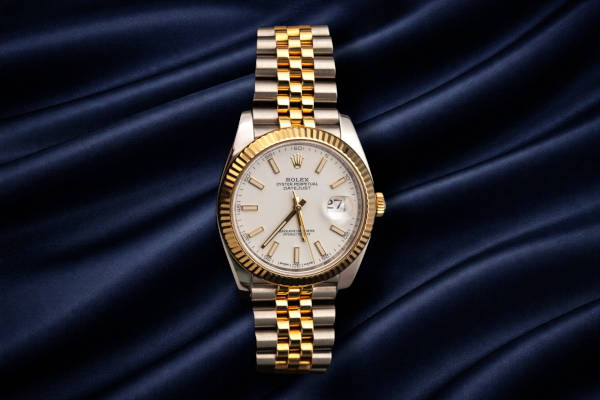
The Jubilee bracelet occupies a unique position in the Rolex lineup. Introduced in 1945 to celebrate the brand’s 40th anniversary, it debuted alongside the original Datejust and was designed to be more refined and comfortable than the utilitarian Oyster. Over time, it has become one of Rolex’s most recognizable - and most debated - bracelet designs.
Visually, the Jubilee is defined by its five-link construction: smaller center links flanked by larger outer links. This immediately gives it a more intricate, jewelry-like appearance compared to the broad, flat links of the Oyster. For buyers, this design difference is not just aesthetic; it has direct implications for comfort, wearability, and how the watch is perceived in different settings.
Origins and Five-Link Design
Historically, the Jubilee bracelet was intended to elevate the Datejust as a versatile watch that could move easily between formal and everyday use. The additional links increase flexibility, allowing the bracelet to drape more naturally around the wrist. This is one of the Jubilee’s key advantages and a reason many long-term Rolex owners describe it as exceptionally comfortable.
Modern Jubilee bracelets are fully solid, with significantly improved construction compared to their vintage predecessors. Earlier folded or hollow-link Jubilees were prone to stretch over time, which contributed to their mixed reputation. Today’s solid-link Jubilees feel far more substantial and durable, addressing many of the concerns buyers once had.
Material options mirror much of the Oyster lineup: Oystersteel, Rolesor, and precious metals depending on the model. Polished center links are common on steel and two-tone versions, giving the bracelet a brighter, more eye-catching presence on the wrist.
Jubilee on Sports Rolex Watches
One of the most interesting developments in recent years is Rolex’s decision to pair the Jubilee bracelet with certain sports models, most notably the GMT-Master II. This move has divided opinion among enthusiasts and buyers alike.
From a functional standpoint, the Jubilee works surprisingly well on sports watches. Its flexibility enhances comfort during extended wear, and modern construction ensures it remains robust enough for daily use. From an aesthetic standpoint, it softens the tool-watch appearance, pushing the watch slightly toward the luxury end of the spectrum.
For buyers, this creates a genuine choice rather than a simple hierarchy. An Oyster-equipped GMT-Master II feels more purpose-driven and understated, while a Jubilee version leans toward elegance and visual interest. Neither is objectively better; the decision depends on how and where the watch will be worn.
Jubilee Bracelet Comfort & Wearability
Comfort is where the Jubilee bracelet often wins outright. The increased number of links allows it to conform closely to the wrist, reducing hot spots and improving overall balance. This is particularly noticeable for buyers with smaller wrists or those sensitive to stiffness in heavier bracelets.
That said, the Jubilee’s polished center links are more prone to showing scratches. For buyers who are meticulous about keeping their watch pristine, this is an important consideration. Light wear will appear sooner than on a fully brushed Oyster bracelet, especially if the watch is worn daily.
Clasp design also plays a role in the wearing experience. Modern Jubilee bracelets typically use the Oysterclasp with Easylink extension rather than Glidelock. While Easylink offers less adjustability than Glidelock, it still provides a practical comfort boost for day-to-day wear.
In buyer terms, the Jubilee bracelet excels when comfort and versatility are prioritized over ruggedness. It is particularly well-suited to watches that will see office wear, social settings, and frequent all-day use. For those who want a Rolex that feels refined without being fragile, the Jubilee remains one of the most appealing options in the catalog.
| Store | Link |
|---|---|
| Ebay | Check it out on Ebay |
| The Luxury Closet | Check it out on The Luxury Closet |
The President Bracelet - Exclusivity and Status
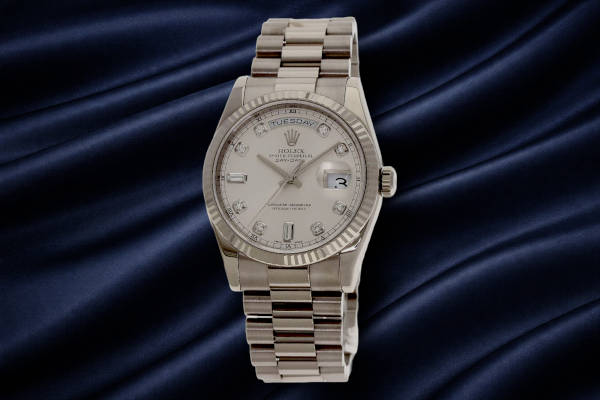
The President bracelet occupies a very different space from both the Oyster and Jubilee. Introduced in 1956 alongside the Day-Date, it was designed to be unmistakably luxurious and immediately recognizable. Over time, it has become one of the strongest visual symbols of Rolex prestige.
Unlike other Rolex bracelets, the President is reserved almost exclusively for the Day-Date collection and is produced only in precious metals. This exclusivity is central to its appeal and directly influences how buyers perceive watches fitted with it.
Design and Precious Metal Construction
The President bracelet uses a semi-circular three-link design, with rounded links that feel noticeably softer and more fluid on the wrist than the flat links of an Oyster. This construction gives the bracelet a distinct visual rhythm and a more sculptural appearance.
Material choice is a defining factor. President bracelets are made only in 18k yellow gold, white gold, Everose gold, or platinum. There is no Oystersteel or two-tone option. For buyers, this immediately positions the watch at a higher price point and signals that the President bracelet is not intended as an everyday tool-watch solution.
In terms of feel, the weight is substantial, especially in gold or platinum. This weight contributes to the sense of luxury but can be polarizing. Some buyers enjoy the reassuring presence, while others find it fatiguing over long periods of wear.
The Crownclasp Explained
One of the President bracelet’s signature features is the Crownclasp, a concealed clasp system integrated seamlessly into the bracelet. When closed, the clasp is nearly invisible, preserving the continuous flow of the links.
From a design perspective, the Crownclasp enhances elegance and symmetry. However, it comes with trade-offs. Unlike the Oysterclasp, it does not offer advanced micro-adjustment systems such as Glidelock. Sizing relies more heavily on precise link removal and less on on-the-fly adjustment.
For buyers with wrists that fluctuate significantly throughout the day, this can be a practical limitation. Comfort is excellent when the fit is correct, but less forgiving than bracelets with active adjustment systems.
Why the President Bracelet Is Not for Everyone
Despite its iconic status, the President bracelet is not universally suitable. Its precious-metal construction makes it more susceptible to visible wear, and its polished surfaces show scratches readily. This is not a flaw, but a characteristic that buyers must accept.
Lifestyle compatibility is another consideration. The President bracelet excels in formal, business, and social environments, but it is less at home in casual or physically demanding settings. Buyers looking for a single watch to cover all aspects of daily life may find it too specialized.
From a collector’s standpoint, the President bracelet carries strong symbolic value. It represents continuity, status, and Rolex’s highest expression of its classic design language. For buyers drawn to that symbolism and willing to accept the practical compromises, it delivers an experience no other Rolex bracelet can replicate.
For others, its exclusivity and elegance may feel restrictive rather than liberating. In that sense, the President bracelet is as much a statement choice as it is a functional one.
| Store | Link |
|---|---|
| Ebay | Check it out on Ebay |
| The Luxury Closet | Check it out on The Luxury Closet |
Other Rolex Bracelet Types You Should Know
While the Oyster, Jubilee, and President bracelets dominate most buying decisions, Rolex has developed a few additional bracelet and strap designs that are worth understanding. These options serve more specialized purposes and appeal to narrower buyer segments, but they can still be decisive depending on taste and use case.
The Pearlmaster Bracelet
The Pearlmaster bracelet is Rolex’s most jewelry-focused metal bracelet. It is primarily associated with the Pearlmaster collection and select high-jewelry references. Visually, it is distinguished by rounded, polished links that emphasize fluidity and shine rather than structure.
Pearlmaster bracelets are produced exclusively in precious metals and are often paired with gem-set cases, dials, and bezels. From a buyer’s perspective, this positions the Pearlmaster firmly outside the realm of everyday versatility. It is not designed for rugged wear or understated elegance.
Comfort is generally excellent due to the bracelet’s rounded link geometry, but practicality takes a back seat to visual impact. For buyers considering a Pearlmaster-equipped Rolex, the decision is less about technical merit and more about personal style and occasion-specific wear.
Oysterflex - A Rubber Strap, Not a Bracelet
Although often grouped with Rolex bracelets in casual conversation, Oysterflex is technically a strap rather than a metal bracelet. That distinction matters, especially for buyers comparing options.
Oysterflex consists of a high-performance elastomer molded over a flexible metal blade. This construction allows it to retain shape, resist stretching, and provide structural support similar to a bracelet, while delivering the comfort and lightness of rubber.
Rolex typically pairs Oysterflex with precious-metal sports models such as certain Daytona, Yacht-Master, and Sky-Dweller references. The contrast between a gold case and a black rubber strap creates a modern, sport-luxury aesthetic that appeals to a different type of buyer.
From a comfort standpoint, Oysterflex excels, particularly in warm climates or active settings. However, it lacks the longevity and resale perception of a metal bracelet. Buyers choosing Oysterflex should do so because it suits their lifestyle, not because they see it as a direct alternative to Oyster or Jubilee bracelets.
Oyster vs Jubilee vs President - A Practical Comparison
For many buyers, the decision ultimately comes down to comparing the three main bracelet types side by side. While specifications and aesthetics matter, real-world use is often the most revealing factor.
The Oyster bracelet prioritizes durability, stability, and function. It feels solid, resists wear, and pairs naturally with sports and everyday Rolex models. It is the most forgiving choice for buyers who want one watch to do everything.
The Jubilee bracelet emphasizes comfort and visual refinement. Its flexibility makes it ideal for long days on the wrist, and its design bridges the gap between sport and dress. Buyers should be comfortable with a more noticeable bracelet and accept that polished links will show wear over time.
The President bracelet is about exclusivity and presence. It offers a unique wearing experience rooted in tradition and luxury but demands compromises in adjustability and versatility. It suits buyers who value symbolism and refinement over practicality.
Rather than viewing these bracelets as better or worse, it is more useful to see them as expressions of different priorities. Rolex has refined each design to excel within its intended role, which is why the “best” bracelet is ultimately the one that aligns most closely with how the watch will be worn.
How to Choose the Right Rolex Bracelet
Choosing the right Rolex bracelet is less about ranking options and more about matching the bracelet to your lifestyle, wrist, and expectations. Buyers who focus only on aesthetics often discover later that comfort or practicality matters far more in daily wear.
Daily Wear vs Occasional Wear
If the watch is intended for daily use, durability and adjustability should be top priorities. The Oyster bracelet excels here, particularly on models equipped with Glidelock or Easylink. Its brushed surfaces also hide scratches better over time, making it more forgiving for frequent wear.
For watches worn primarily in office or social settings, the Jubilee bracelet offers a strong balance. It remains comfortable during long days while adding a touch of refinement that suits more formal environments. Buyers who rotate watches frequently may also appreciate the Jubilee’s visual interest, as it feels more decorative than the Oyster.
Occasional-wear watches - especially those reserved for business events or formal occasions - are where the President bracelet makes the most sense. In these contexts, its elegance and precious-metal construction feel intentional rather than excessive.
Wrist Size, Weight, and Comfort
Wrist size plays a significant role in bracelet satisfaction. Buyers with smaller wrists often find the Jubilee more accommodating due to its flexibility and smoother articulation. The Oyster, while stable, can feel stiffer until properly sized and broken in.
Weight sensitivity is another factor. Precious-metal Oyster and President bracelets can feel noticeably heavy. Some buyers enjoy this as a sign of quality, while others find it distracting during long wear. Trying the watch on for an extended period, if possible, is invaluable.
Adjustment systems also matter more than many buyers expect. Glidelock offers the greatest flexibility, followed by Easylink. Crownclasp-equipped President bracelets require more precise sizing and reward buyers whose wrists remain relatively consistent throughout the day.
Resale and Long-Term Value
From a resale standpoint, certain bracelet and model combinations are consistently popular. Stainless steel sports models on Oyster bracelets are generally the easiest to resell. Jubilee-equipped sports models can attract strong demand as well, but preferences fluctuate with production trends.
President bracelets hold value differently. Their resale is closely tied to gold prices, condition, and overall market sentiment for Day-Date models. Buyers should view them as long-term ownership pieces rather than short-term trades.
Ultimately, the best bracelet choice is one that encourages you to wear the watch more often. Comfort, confidence, and usability tend to outweigh theoretical value considerations over time.
Collector Insight: What Enthusiasts Really Prefer
Among seasoned collectors, bracelet preference often evolves. Many start with Oyster bracelets for their practicality, then grow to appreciate the Jubilee for its comfort and visual nuance. The President bracelet tends to attract buyers later in their collecting journey, once they are drawn more by symbolism and heritage than versatility.
Collectors also recognize that modern Rolex bracelets are fundamentally different from their vintage counterparts. Complaints about stretch and fragility largely belong to older designs. Today’s bracelets - across all three major types - are engineered to a level that minimizes functional compromise.
One recurring insight is that bracelet choice can change how a watch feels emotionally. The same watch head can project confidence, restraint, or formality depending on what it is attached to. This emotional response often matters more than specifications on paper.
Buying Advice & Final Thoughts
When choosing a Rolex, the bracelet should be treated as a primary decision, not a secondary one. It affects comfort, aesthetics, long-term satisfaction, and even resale outcomes.
The Oyster bracelet is the safest, most versatile option for buyers seeking durability and everyday usability. The Jubilee offers superior comfort and a refined look that works across many settings. The President bracelet stands apart as a symbol of Rolex’s most traditional expression of luxury.
Rather than asking which bracelet is best, a better question is which bracelet best supports how you intend to wear the watch. Answer that honestly, and the right choice usually becomes clear.
A well-chosen Rolex bracelet does not just hold the watch on your wrist - it shapes the entire ownership experience.