Rolex Oyster Perpetual Review: Full Guide to the Collection

Vintage watch restoration and historical research
The Rolex Oyster Perpetual blends timeless design with everyday practicality. This guide covers movements, sizes, dials, pricing, value retention, and smart buying tips.
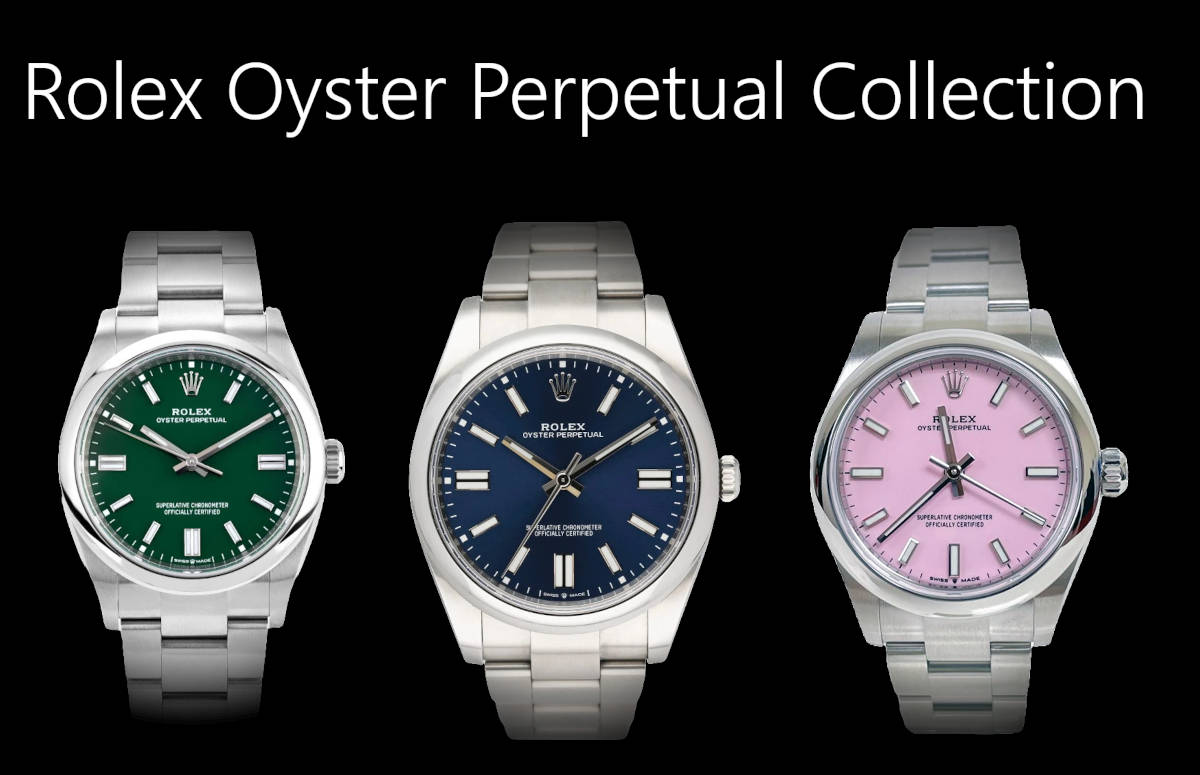
The Rolex Oyster Perpetual is, in many ways, the watch that defines the entire Rolex philosophy. It’s the brand’s most distilled creation — a simple three-hand watch built on the two innovations that changed modern watchmaking forever: the Oyster case (1926) and the Perpetual rotor (1931). Everything Rolex became famous for — precision, durability, practicality, and timeless design — begins right here.
Among collectors, the Oyster Perpetual (often shortened to OP) holds a special place. It’s the entry point into Rolex ownership, yet it never feels like a compromise. There’s no date window, no rotating bezel, no chronograph registers — just perfect proportions, flawless finishing, and bulletproof engineering. This is the Rolex that doesn’t try to impress. It simply is.
In the Rolex hierarchy, the Oyster Perpetual plays the role of the essential daily watch. It’s the model that appeals to first-time buyers searching for their “forever watch,” seasoned collectors who appreciate its purity, and investors who understand its long-term stability. Especially in recent years — with the explosion of the “Stella-inspired” colorful dials — the Oyster Perpetual has transformed from the quiet minimalist of the catalog into one of the most talked-about Rolex lines.
What Is the Rolex Oyster Perpetual?
The Rolex Oyster Perpetual is a time-only automatic watch that sits at the core of Rolex’s design language. It’s the purest interpretation of the brand’s DNA: no complications, no unnecessary ornamentation, only the essentials executed flawlessly.
Despite being the most “affordable” Rolex, it is far from basic. The OP shares the same fundamental technologies as higher-end models like the Submariner, Explorer, and Datejust — including chronometer-certified movements, 100m water resistance, and Rolex’s famously robust Oystersteel.
Why collectors love it:
- Timeless design — it hasn’t changed dramatically in decades, and that is precisely the point.
- Versatility — from formal wear to jeans and a t-shirt, it works everywhere.
- Reliability — Rolex calibers in the OP are known for running accurately for years with minimal servicing.
- Market stability — historically, the OP offers strong value retention, especially the 36 mm and 41 mm sizes.
- No “hype tax” — despite increasing demand, the OP remains more attainable than sport models.
A Brief History of the Oyster Perpetual
To understand the Oyster Perpetual, you must understand the two inventions behind its name.
The Oyster Case (1926)
In 1926, Rolex introduced the world’s first truly waterproof wristwatch. The “Oyster” name came from the screw-down case structure that sealed the movement like an oyster shell. It became an instant icon when Mercedes Gleitze swam across the English Channel wearing one — and the watch emerged fully functional.
The Perpetual Rotor (1931)
Five years later, Rolex added the world’s first self-winding rotor mechanism. Powered by wrist movement, it allowed the watch to run continuously without manual winding — a technology now standard across the industry.
The combination of these two breakthroughs formed the Oyster Perpetual. Over the decades, the watch evolved subtly — new movements, new dial styles, improved materials — but the core design remained intact. This consistency is part of what makes the OP so respected: it represents continuity in a world of ever-changing trends.
Design & Features of the Rolex Oyster Perpetual
At first glance, the Rolex Oyster Perpetual might look simple — and that’s exactly its intention. But beneath the apparent minimalism lies one of the most refined executions of a three-hand watch in modern watchmaking. Every surface, curve, and proportion has been engineered to achieve the perfect balance between durability, elegance, and everyday comfort.
Case & Available Sizes
One of the strengths of the Oyster Perpetual lineup is its wide range of case sizes, which allows it to fit almost any wrist and style preference. The current collection includes: 28 mm, 31 mm, 34 mm, 36 mm, and 41 mm. Rolex discontinued the 39 mm version in 2020, replacing it with the slightly more contemporary OP 41.
28 mm and 31 mm are primarily targeted at smaller wrists but remain unisex options.
34 mm and 36 mm are the most historically faithful sizes — the classic proportions that made the OP iconic.
41 mm appeals to modern tastes and larger wrists, especially popular among younger buyers.
Regardless of size, the case architecture remains consistent: 100-meter water resistance, Oystersteel construction, a polished bezel (domed and elegantly curved), and the signature screw-down crown with Twinlock sealing. The result is a watch you can swim with, wear daily, and trust for decades.
Dials & Colors
The dial is where the Oyster Perpetual truly expresses its personality. Over the last few years, Rolex has introduced some of the most eye-catching dial colors in its entire catalog. Classic sunburst finishes coexist with vibrant lacquered tones.
Popular dial options include:
- Black
- Silver
- Blue
- Green
- Candy Pink
- Turquoise (“Tiffany-like”)
- Yellow
- Coral Red
The 2020 release of the “Stella-inspired” lacquer dials created massive hype, pushing pre-owned prices far above retail. While Rolex later streamlined the color palette, the OP remains one of the few Rolex models that offers youthful, playful aesthetics without compromising its timeless DNA.
From a collector’s perspective, 36 mm is the sweet spot for dial color desirability. The proportions highlight the colors without feeling overly large or too compact.
Oyster Bracelet & Clasp
Every Oyster Perpetual is equipped with the robust and silky Oyster bracelet — a three-link configuration known for comfort and durability. Rolex uses solid links and a fully machined clasp, making the bracelet feel exceptionally stable on the wrist.
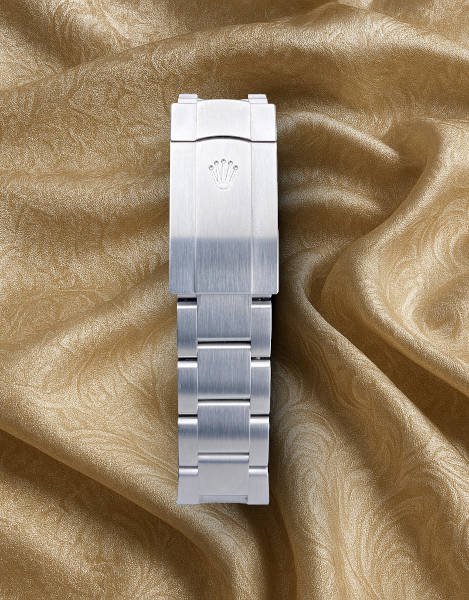
The clasp includes the Easylink 5 mm comfort extension, allowing quick adjustment without tools — a small but meaningful feature that enhances the OP’s role as an everyday companion.
Water Resistance & Durability
The Oyster Perpetual is designed to be worn without fear. With 100 meters of water resistance, a screw-down crown, and a hermetically sealed Oyster case, it handles swimming, showers, and even recreational diving. Rolex testing standards exceed industry norms, meaning this watch can survive almost anything daily life throws at it.
What truly sets the OP apart is the combination of elegance and ruggedness. It looks refined enough for formal events, yet you can take it to the beach, the gym, or a remote hiking trip. Few luxury watches offer this level of versatility.
Movements & Accuracy of the Rolex Oyster Perpetual
While the Oyster Perpetual is outwardly simple, its performance is anything but. One of the most compelling aspects of the OP line is that it receives the same technical advancements and high-precision calibers found in more expensive Rolex models. Rolex does not compromise on movement quality, even in its most “entry-level” watch.
Modern Rolex Calibers: 2232 & 3230
The current generation of Oyster Perpetual watches uses two calibers:
- Caliber 2232 — found in smaller OP sizes (28, 31, 34 mm)
- Caliber 3230 — used in the OP 36 and OP 41
Both movements embody Rolex’s latest engineering, including silicon (Syloxi) components, advanced lubricants, and enhanced magnetic resistance. These features aren’t just marketing points — they make the watch measurably more stable over years of wear.
Caliber 3230 Highlights
This is the same movement architecture powering the modern Submariner (No-Date), which speaks volumes about its reliability.
Key features:
- Chronergy escapement — improves energy efficiency by ~15%
- 70-hour power reserve — a significant upgrade over previous generations
- Paramagnetic blue Parachrom hairspring — resistant to shocks and magnetism
- High shock resistance — ideal for daily wear
- Bidirectional self-winding rotor — smoother, more efficient winding
If you remove the date complication from the Submariner, you essentially get the OP’s movement — a strong selling point for enthusiasts who want Submariner-level precision in a minimalist format.
Accuracy: Rolex’s -2/+2 Promise
Every Oyster Perpetual is a Superlative Chronometer, meaning it exceeds COSC standards. Rolex tests the fully cased watch to an accuracy rating of:
–2/+2 seconds per day
Real-world performance often surpasses this, with many owners reporting stability well within 1 second per day. Very few luxury watches — even at higher price points — offer this level of precision consistently.
The result is a watch you don’t have to baby. You can wear it to the office, the gym, or on vacation without worrying about magnetism, shocks, or daily fluctuations.
Rolex Oyster Perpetual Price Guide
Although the Oyster Perpetual is considered the gateway into Rolex ownership, demand often exceeds supply. Prices vary significantly between retail and the pre-owned market — especially for discontinued dial colors.
Retail Prices (MSRP)
Depending on size, the retail price typically ranges from:
- 28 mm: entry-level pricing
- 31 mm & 34 mm: slightly higher
- 36 mm: mid-range
- 41 mm: highest retail price in the OP line
Exact numbers fluctuate year to year due to Rolex price adjustments, but the OP remains the most accessible watch in the catalog.
Pre-Owned Market Prices
The secondary market tells a different story. Due to limited availability at official retailers, Oyster Perpetual watches — particularly in 36 mm and 41 mm — can sell for 20–150% above retail, depending on color and condition.
Premium-priced variants include:
- Turquoise (“Tiffany-style”)
- Yellow
- Coral Red
- Candy Pink
These dials became modern cult classics, and discontinued colors have appreciated significantly.
Investment & Value Retention
The Oyster Perpetual may not be marketed as a collector’s piece, but its financial performance is impressive. Historically:
- 36 mm holds value the best
- Bold colors outperform conservative ones
- Limited production dials show strong appreciation
It’s one of the few “simple” watches that behaves like a stealth investment — robust, stable, and often surprisingly profitable.
Rolex Oyster Perpetual vs Other Rolex Models
One of the most common questions prospective buyers ask is how the Oyster Perpetual compares to other Rolex lines. Since the OP sits at the foundation of the catalog, it naturally shares DNA with several models while remaining intentionally simpler and cleaner. Understanding these differences helps buyers choose the right watch for their lifestyle and budget.
Oyster Perpetual vs Datejust
The Datejust is the closest relative to the Oyster Perpetual. Both share the same case construction, Oystersteel, and automatic movements. However, the Datejust introduces additional features that elevate its versatility and price point:
- Date complication with Cyclops magnifier
- Fluted bezel (available)
- Jubilee bracelet option
- More dial variety and finishes
- Broader size range
While the Datejust is more luxurious and customizable, the Oyster Perpetual remains the purist’s choice — clean, minimal, and evergreen. If you prefer the simplest, most balanced Rolex aesthetic, the OP is unmatched. If you want refinement and recognizable Rolex traits, the Datejust becomes compelling.
Oyster Perpetual vs Submariner
The Submariner is Rolex’s most famous diver, and its differences from the OP highlight the latter’s minimalist philosophy.
Submariner advantages:
- Ceramic rotating bezel
- 300 m water resistance
- Larger, more tool-like presence
- Stronger brand recognition
- Higher resale value in most cases
Oyster Perpetual advantages:
- More versatile size options
- Slimmer and more elegant on the wrist
- Cleaner and more classic design
- More attainable pricing
- No “hype tax” for most variants
If you want a rugged all-purpose sports watch, the Submariner wins. If you want a daily watch that feels lighter, more refined, and less bulky, the Oyster Perpetual is the smarter choice.
Oyster Perpetual vs Explorer
The Rolex Explorer is sometimes described as the “Oyster Perpetual with a mission.” It’s slightly more robust and purpose-driven, with its signature 3-6-9 dial layout. Both watches are clean, time-only models, but:
- The Explorer is more of an adventure/tool watch
- The OP offers more colors and sizes
- The Explorer has a more iconic legacy in mountaineering and exploration
If you want understated toughness, go Explorer. If you want versatility and aesthetic choice, choose the OP.
Pros & Cons of the Rolex Oyster Perpetual
Even though it’s one of Rolex’s most balanced models, the Oyster Perpetual has clear strengths and a few limitations depending on what buyers expect.
Pros
- Timeless, pure design that never ages
- Highly accurate calibers with modern tech
- 100 m water resistance — perfect daily companion
- Extremely versatile — from business attire to beach trips
- Great value retention (especially 36 mm & rare dials)
- Comfortable Oyster bracelet with Easylink
- Lower retail price compared to most Rolex models
Cons
- No date complication (a deal-breaker for some buyers)
- Limited availability at authorized dealers
- Higher pre-owned prices for popular dials
- No fluted bezel or Jubilee bracelet options
- Highly desired colors discontinued, limiting choice
How to Choose the Right Oyster Perpetual Size
Selecting the correct OP size is crucial because its minimalist design accentuates proportions. Rolex sizing is about wrist shape and aesthetic preference rather than gender.
General Guidelines
- 28 mm: Very small wrists, classic feminine look
- 31 mm: Women’s everyday size or very slender wrists
- 34 mm: Unisex, vintage-style proportion
- 36 mm: The historical sweet spot — fits almost everyone
- 41 mm: Best for larger wrists or those wanting a sporty presence
Wrist Size Recommendations
- 5.5"–6.0" wrist: 31 mm or 34 mm
- 6.0"–6.75" wrist: 34 mm or 36 mm
- 6.75"–7.25" wrist: 36 mm or 41 mm
- 7.25" and above: 41 mm for the best balance
The key is harmony: the lugs should frame the wrist without overhanging. Because the OP has a clean dial, a too-large size quickly appears empty, while a too-small size looks overly vintage. For most men and women, 36 mm is the “Goldilocks” choice — modern but not oversized.
How to Spot a Fake Rolex Oyster Perpetual
As demand for the Oyster Perpetual has skyrocketed — especially after the release of the colorful “Stella-inspired” dials — counterfeiters have become increasingly sophisticated. While Rolex counterfeits used to be easy to detect, modern replicas can fool buyers who are not trained to look for fine details. Fortunately, the OP’s minimalist design also makes it easier to identify inconsistencies if you know what to check.
Key Signs of a Fake OP
1. Dial Fonts & Markers
Genuine Rolex printing is razor sharp. On a fake Oyster Perpetual, the following issues often appear:
- Misaligned markers
- Slightly uneven font thickness
- Weak or blurry minute track printing
- Incorrect lume shape inside the hour markers
Lacquer dials (Turquoise, Yellow, Red) are the most frequently counterfeited, but they’re also the easiest to detect because genuine Rolex lacquer is deep, glossy, and extremely uniform.
2. Movement Behavior
The OP uses high-frequency movements (28,800 vph), resulting in a smooth seconds-hand sweep. Fakes often:
- Stutter noticeably
- Have inconsistent amplitude
- Produce a louder ticking sound
Removing the caseback yourself isn’t recommended, but any trusted watchmaker can verify the movement.
3. Serial & Model Number Engravings
Authentic Rolex watches have:
- Deep, laser-precise rehaut engravings
- Perfect alignment with the 12 o’clock marker
- Clean serial numbers with no irregular spacing
If the engraving looks shallow or misaligned, it’s a red flag.
4. Bracelet Quality
Rolex bracelets feel solid, smooth, and balanced. Counterfeit bracelets often:
- Rattle
- Have sharp edges
- Use hollow links
- Show uneven finishing on the clasp
The Easylink system should operate smoothly and firmly.
Buying Guide: How to Choose & Where to Buy
| Store | Link |
|---|---|
| Ebay | Check it out on Ebay |
| The Luxury Closet | Check it out on The Luxury Closet |
The Oyster Perpetual is one of the most straightforward Rolex models to buy — but in practice, availability and pricing make the process more strategic.
1. Buying from Rolex Authorized Dealers (ADs)
Purchasing at retail is ideal due to:
- Full warranty
- Guaranteed authenticity
- Best price (no resale markup)
However, demand remains high, especially for 36 mm and 41 mm. Many ADs maintain waiting lists for these sizes. Smaller sizes (31 & 34 mm) tend to be easier to obtain.
2. Buying Pre-Owned
The pre-owned market is the most realistic option if:
- You want a specific discontinued dial color
- You want immediate availability
- You are comfortable paying above retail
Choose reputable sellers only — established watch dealers, trusted marketplaces, or local stores with watchmaker authentication services. Always request:
- Full set (box + papers)
- Movement test results
- Service history
3. Investment Considerations
The Oyster Perpetual is one of the strongest performers in Rolex’s “entry-level” category.
Models with the best long-term value:
- 36 mm with rare dials
- 41 mm turquoise
- Discontinued colors (2020–2022 era)
The neutral dials (black, silver, blue) retain value very well but do not appreciate as aggressively as the colorful variants.
Conclusion: Why the Oyster Perpetual Is the Perfect First Rolex
The Rolex Oyster Perpetual sits at the crossroads of heritage, reliability, and timeless design. It is the watch that best represents what Rolex stands for: precision, durability, and understated elegance. Whether you’re a seasoned collector or buying your first luxury timepiece, the OP offers:
- A robust movement shared with higher-priced models
- Iconic design that never goes out of style
- Exceptional durability for daily wear
- Strong resale value
- A perfect balance of sportiness and sophistication
Few watches deliver this combination with such purity. The Oyster Perpetual is more than just the “entry-level” Rolex — it’s the foundation of modern horology and a watch you can confidently wear for the rest of your life.