The Rise of Ladies Citizen Eco Drive Watches

Mechanical movements and watch engineering
The women's watch market is shifting from fast-fashion quartz to sustainable, engineered timepieces. This deep dive into the Citizen Eco-Drive explores the advanced solar technology, 15-year lithium-ion lifespan, and ultra-durable Super Titanium construction that make it a masterpiece of practical micro-engineering.
- The Technical Deep Dive: Inside Ladies Citizen Eco Drive Watches
- Material Science: Why Super Titanium™ Elevates Women's Citizen Watches
- The Value Proposition of Ladies Eco-Drive Watches in 2026
- Addressing the "Disadvantages": An Engineer's Honest Take
- The Verdict: Why Ladies Citizen Eco Drive Watches Lead the Market
- Related Reading
- Official Manufacturer Resources
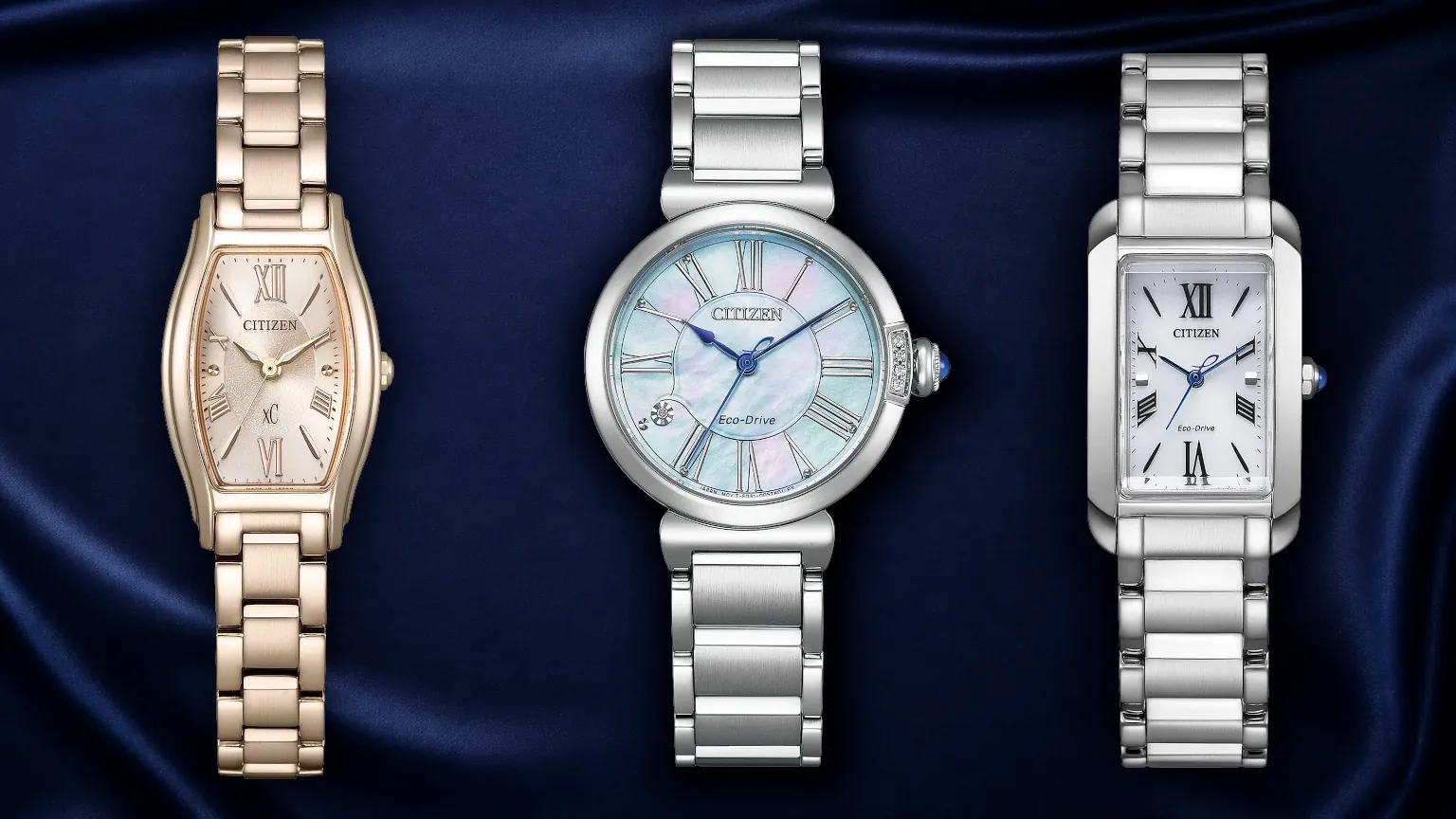
Let’s be honest: for decades, the “women’s watch” category in mainstream horology was too often an afterthought—a smaller, bejeweled version of a men’s design, housing a basic, disposable quartz movement. The engineering was secondary to the aesthetics. But a shift is underway, driven by a consumer who demands more: sustainability, longevity, and genuine innovation, all wrapped in elegant design. Enter the unexpected hero of this story: the modern lineup of ladies citizen eco drive watches. This isn't just a watch that runs on light; it's a meticulously engineered micro-power plant, and its surge in popularity among women is a masterclass in how real technology meets real-world values.
The Technical Deep Dive: Inside Ladies Citizen Eco Drive Watches
Key Specs at a Glance:
- Power Cell: Silicone Amorphous Solar Cell
- Energy Storage: Rechargeable Lithium-Ion Cell
- Calibre (Common): E031 (Compact 3-hand, no-date)
- Power Reserve: Minimum 180 days in total darkness
- Cell Lifespan: ~15-20 years before replacement
Don’t call it merely “solar.” That undersells the mechanical and materials science at play. As an engineer, what impresses me isn’t the marketing, but the tolerances and problem-solving inherent in the Eco-Drive system.
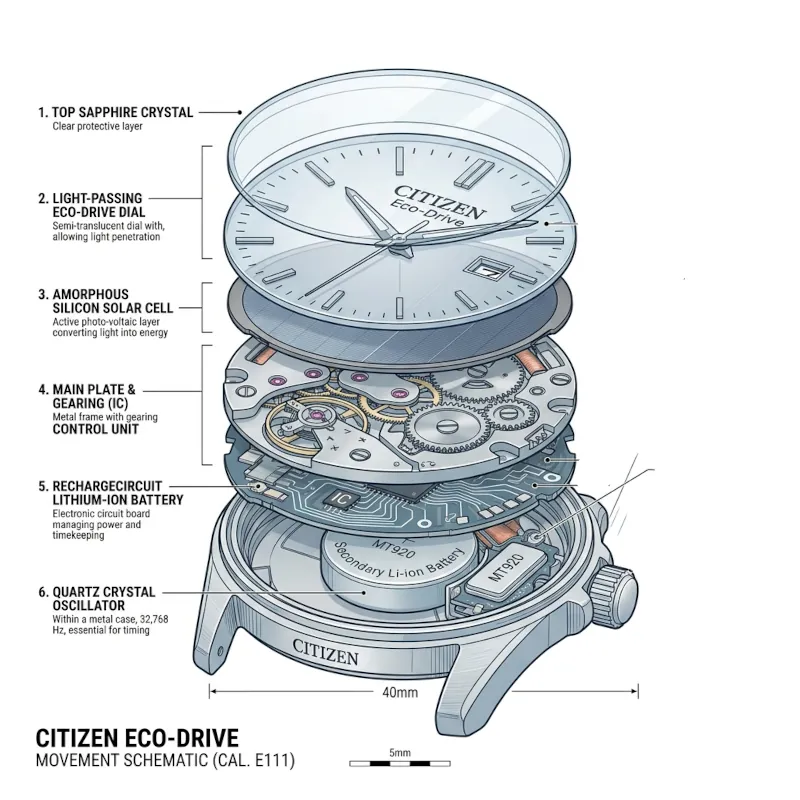
At its heart is a silicone amorphous solar cell positioned beneath the dial. Citizen’s true innovation lies in its efficiency across the light spectrum. Unlike early solar watches that needed direct sunlight, the Eco-Drive cell is engineered to harvest energy from any light source, including dim indoor incandescent or LED bulbs. This energy charges a lithium-ion storage cell. According to Citizen’s official technical documents, a full charge provides a minimum power reserve of 180 days (over six months) of operation in total darkness, a specification consistent across the platform, from the compact ladies' Calibre E031 to more complex modules.
The real engineering challenge isn’t generation, but energy management and longevity. The integrated circuit (IC) acts as a precision regulator to prevent overcharging and deep discharging, which are the primary killers of rechargeable cells. This is why the answer to the common enthusiast question—“What is the average lifespan?”—requires nuance. The primary wear component is the rechargeable lithium-ion cell. Its lifespan is rated for thousands of charge cycles; under typical use, this translates to 15-20 years before cell replacement may be needed—a simple service for any authorized technician. The solar cell and movement itself are designed to last far longer.
Sarah’s Workbench Pro Tip: Worried about low-light office life? Don’t be. The storage cell’s capacity is oversized for daily drain. If your watch stops, it’s not broken. Give it 30-60 minutes under a strong desk lamp—not sunlight—for a “jump start.” Direct sun can cause thermal expansion issues if the watch is completely drained and very cold/hot. Gentle, consistent light is the engineer’s choice for recharging.
Material Science: Why Super Titanium™ Elevates Women's Citizen Watches
This is where Citizen separates itself from fashion brands. For many women’s models, the case and bracelet material isn’t standard stainless steel, but Citizen’s proprietary Super Titanium™. This isn’t a marketing term; it’s a surface-hardening technology called Duratect. Through this process, the titanium is bombarded with ions, creating a layer with a Vickers hardness of approximately 1000-1200 Hv, making it five times harder than stainless steel (roughly 200 Hv) and highly resistant to scratches, while being 40% lighter.
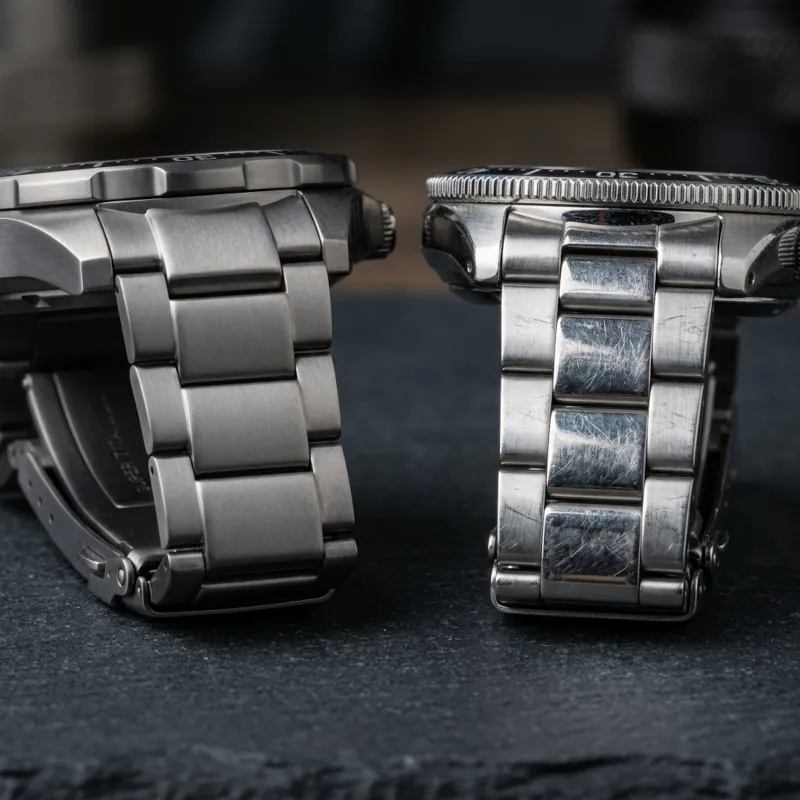
The benefit for daily wear is profound. A 36mm two-tone Super Titanium watch is feather-light and will look new for years, a direct answer to the desire for durable elegance. Pair this with a sapphire crystal (on many, but not all, models—always check the spec sheet), which has a Mohs hardness of 9, and you have a timepiece built to resist the rigors of an active life.
The Value Proposition of Ladies Eco-Drive Watches in 2026
In a market bifurcated between fast-fashion disposable accessories and ultra-expensive Swiss luxury, Citizen Eco-Drive occupies a crucial, intelligent middle ground. It’s answering the “Seiko vs. Citizen” debate not with fanfare, but with a different value equation. While Seiko excels in mechanical innovation, Citizen’s Eco-Drive represents the pinnacle of applied, practical, and sustainable quartz technology.
The trending search data for “Price - Topic” is telling. Consumers are value-conscious. A typical high-spec women’s Eco-Drive (from collections like the Silhouette or Corso) with Super Titanium, sapphire crystal, and a mother-of-pearl dial often retails between $300-$600.
| Store | Link |
|---|---|
| Ebay | Check it out on Ebay |
For that price, you get materials and a proven movement technology that would cost 3-4 times more from a Swiss brand. It’s not an emotional purchase of heritage; it’s a rational purchase of superior materials engineering and hassle-free utility.
Addressing the "Disadvantages": An Engineer's Honest Take
No system is perfect. From a pure horology standpoint, the “disadvantage” is the lack of a sweeping seconds hand and the mechanical soul that enthusiasts like me cherish. It’s a quartz regulator—albeit a supremely advanced one. Furthermore, the theoretical long-term disadvantage is a service dependency on Citizen for the proprietary storage cell, unlike a standard battery. However, this is offset by the multi-decade interval between services and the total elimination of routine battery replacement and its environmental toll. Compared to the 3-5 year battery replacement cycle of standard quartz or the 5-7 year service interval of a mechanical watch costing ten times as much, the Eco-Drive’s lifecycle cost and convenience are objectively excellent.
The Verdict: Why Ladies Citizen Eco Drive Watches Lead the Market
The rising appeal of ladies citizen eco drive watches is no fleeting trend. It’s a logical response from an informed market. It represents a harmony between parts: sustainable technology, durable material science, and versatile design. It’s for the professional who appreciates that her watch won’t die before a crucial meeting, the eco-conscious consumer who minimizes battery waste, and the savvy enthusiast who recognizes quality engineering at a fair price.
It may not have the tourbillons of Geneva, but in its own quiet, relentless way, the Eco-Drive movement is a masterpiece of modern micro-engineering. It proves that on the wrist, the most elegant solution is often the most intelligent one.
| Store | Link |
|---|---|
| Ebay | Check it out on Ebay |
Related Reading
- Mechanical vs. Quartz: The Eternal Debate – Dive deeper into the fundamental differences between these two movement types and discover which is right for your lifestyle. Read more
- Japanese vs. Swiss: A 2025 Showdown – Explore how Citizen's innovation stacks up against Swiss luxury in our comprehensive market analysis. Read more
- The Evolving World of Women's Watches – From classic elegance to smart tech, discover the styles and trends shaping women's horology. Read more
- Crystal Clear: A Guide to Watch Glass – Understand the materials protecting your dial, from scratch-prone acrylic to near-indestructible sapphire. Read more
Official Manufacturer Resources
For the most accurate and detailed technical specifications, please refer to Citizen's official resources: