Hybrid Watches: The Smart Compromise Between Mechanical Tradition and Modern Tech

Mechanical movements and watch engineering
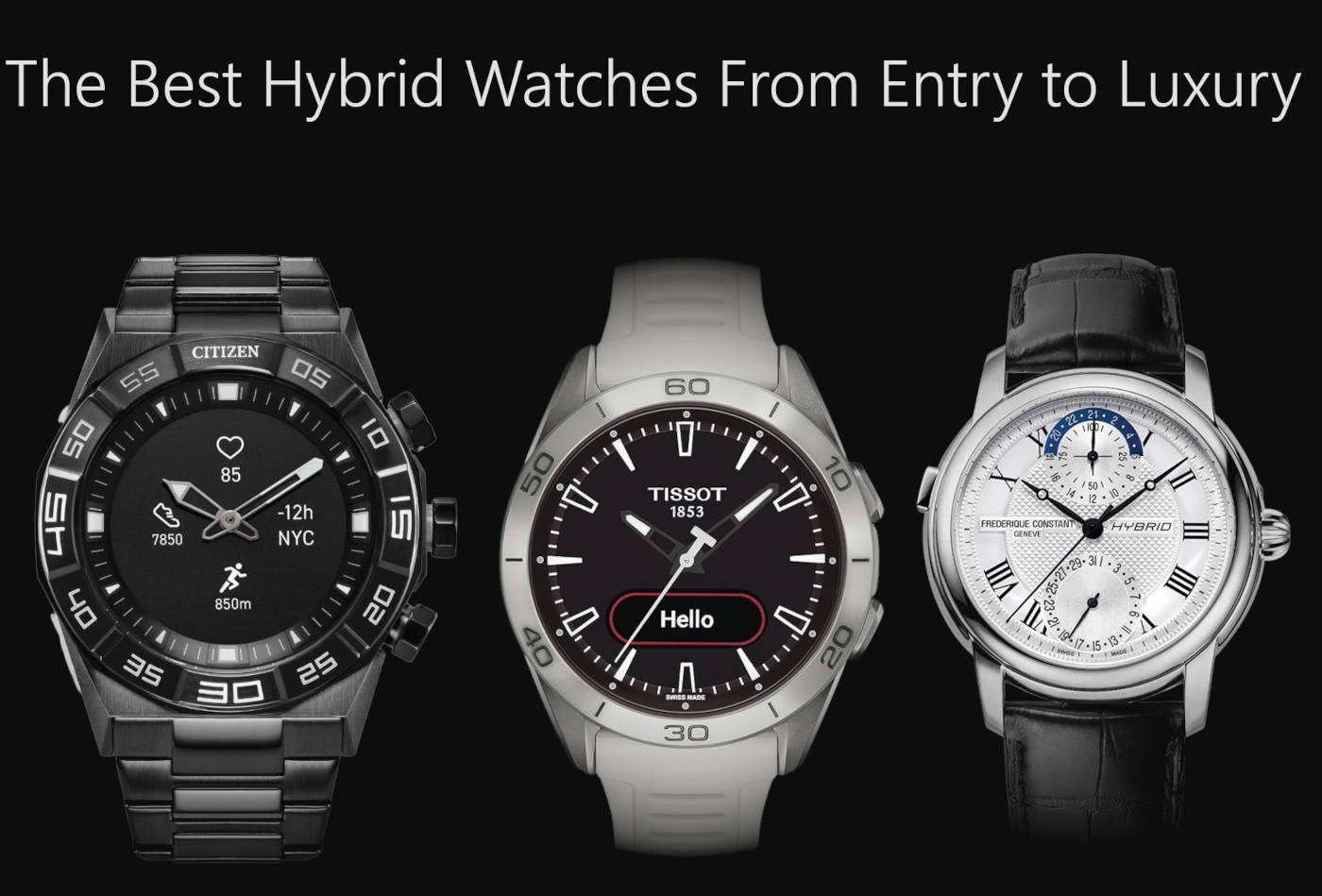
Hybrid watches offer the perfect middle ground between analog tradition and modern tech. From entry-level Fossil and Garmin models to luxury Frederique Constant pieces, this guide explains how hybrids work, compares them with smartwatches and mechanical watches, and helps buyers choose the right model for their lifestyle.
- What Is a Hybrid Watch?
- How Hybrid Watches Work (Without Overcomplicating It)
- Hybrid Watch vs Smartwatch vs Mechanical Watch
- Who Hybrid Watches Are Really For
- Best Affordable Hybrid Watches (Under $500)
- Best Mid-Range Hybrid Watches ($500–$2000)
- Luxury Hybrid Watches (Above $2,000)
- What It’s Actually Like to Live With a Hybrid Watch
- Are Hybrid Watches Worth It?
- How to Choose the Right Hybrid Watch
- Final Thoughts: The Quiet Future of Wearables
What Is a Hybrid Watch?
Hybrid watches combine the traditional design of analog timepieces with discreet smart features such as activity tracking, notifications, and Bluetooth connectivity. Unlike full smartwatches, hybrid watches retain physical hands and classic watch aesthetics while hiding their digital components beneath the dial.
In simple terms, a hybrid watch is a connected analog watch. It looks like a traditional timepiece but communicates with your smartphone to deliver subtle alerts, track steps, monitor sleep, and sometimes even measure heart rate.
The appeal is clear: you get essential smart functionality without sacrificing timeless design.
For many buyers, hybrid watches represent the middle ground between mechanical heritage and digital convenience.
How Hybrid Watches Work (Without Overcomplicating It)
At their core, hybrid watches integrate two systems:
- A traditional quartz or mechanical movement to display time.
- A low-energy Bluetooth module connected to a companion smartphone app.
Instead of a large touchscreen, information is delivered in subtle ways:
- Vibrations for notifications
- Sub-dial indicators for activity goals
- Small hidden digital displays (in some models)
- Hand movements pointing to preset markers
Because they use minimal displays and low-power components, hybrid watches offer dramatically longer battery life than smartwatches.
Typical battery ranges:
- 2–3 weeks for rechargeable models
- 4–6 months (or more) for coin-cell battery models
This extended battery life is one of the strongest arguments in the hybrid watch vs smartwatch debate. You avoid the daily charging cycle that defines most wearable tech.
Unlike mechanical watches, however, hybrid models depend on apps and firmware updates to unlock their full functionality. They sit somewhere between horology and consumer electronics.
Hybrid Watch vs Smartwatch vs Mechanical Watch
Understanding the differences helps clarify whether hybrid watches are the right fit.
Design Language
- Smartwatch: Screen-first. Technology is visible and dominant.
- Mechanical watch: Craft-first. The movement and finishing define the watch.
- Hybrid watch: Classic exterior, hidden technology.
Hybrids appeal to those who prefer traditional aesthetics but still want modern connectivity.
Battery & Maintenance
- Smartwatch: 1–3 days, frequent charging.
- Mechanical: No battery, requires servicing every 5–10 years.
- Hybrid: Weeks or months per battery cycle, minimal upkeep.
Hybrid watches reduce friction without eliminating electronics entirely.
Longevity & Upgrade Cycle
Smartwatches become outdated quickly due to software evolution. Mechanical watches can last generations. Hybrid watches sit in between.
While their analog components may age well, app support and software compatibility remain long-term considerations. Buyers should evaluate brand stability and app ecosystem quality before purchasing.
Emotional Value
Mechanical watches often carry emotional weight — craftsmanship, heritage, collectability.
Smartwatches are tools.
Hybrid watches aim to balance practicality and refinement. They are not heirloom pieces in most cases, but they offer more personality than a black glass screen.
Who Hybrid Watches Are Really For
Hybrid watches are not designed for hardcore athletes seeking advanced GPS metrics. Nor are they ideal for traditional collectors focused purely on mechanical excellence.
Instead, they serve a specific type of wearer:
- Professionals who want notifications without distractions.
- Style-conscious buyers who dislike digital screens on the wrist.
- Users tired of charging a device every night.
- Watch enthusiasts curious about connected functionality without committing to a full smartwatch.
In many ways, hybrid watches represent a mature wearable choice. They do not try to replace your phone. They simply extend it quietly.
For buyers exploring alternatives to traditional smartwatches, the hybrid category offers a compelling balance of design, battery life, and subtle technology.
Now that we understand what hybrid watches are and how they work, the next step is clear:
Which models actually deliver on this promise — and which price tier makes the most sense for you?
Best Affordable Hybrid Watches (Under $500)
The entry-level segment is where hybrid watches make the most practical sense. At this price point, you are not paying for haute horology — you are paying for functionality wrapped in familiar design.
Two standout options dominate the affordable category.
Citizen CZ Smart Hybrid
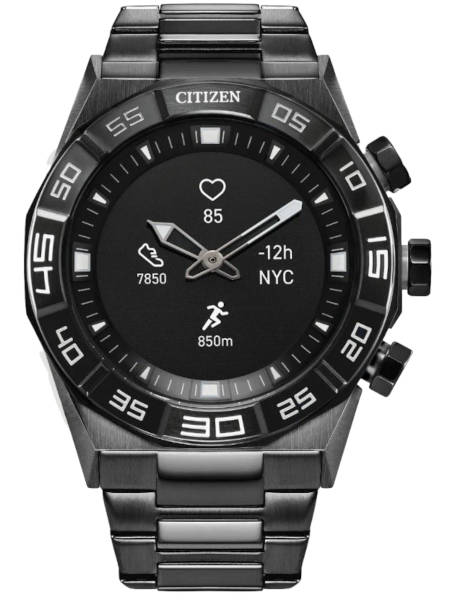
The Citizen CZ Smart Hybrid brings a different kind of credibility to the affordable hybrid watch segment. Instead of approaching the category as a tech brand experimenting with analog design, Citizen builds on decades of traditional watchmaking experience and integrates smart features discreetly into a familiar case and dial format.
Most versions feature a traditional analog handset paired with a subtle digital display integrated into the dial, delivering notifications, wellness insights, and activity tracking without overwhelming the watch’s classic appearance.
Positioning:
A heritage watch brand offering modern connected functionality in a design that still feels like a “real” watch.
Strengths:
- Established global watch brand reputation
- Balanced analog-first design language
- Solid build quality with recognizable Citizen styling
- Practical wellness and notification features
- Competitive battery life for a connected analog watch
Weaknesses:
- Smaller digital display limits interaction depth
- Smart features are useful but not as advanced as full smartwatches
- App experience depends on long-term software support
| Store | Link |
|---|---|
| Ebay | Check it out on Ebay |
The Citizen CZ Smart Hybrid is best suited for buyers who want connected features without abandoning traditional watch aesthetics. It appeals particularly to those who prefer purchasing from an established watchmaker rather than a fashion or tech-focused brand.
Garmin vívomove Trend
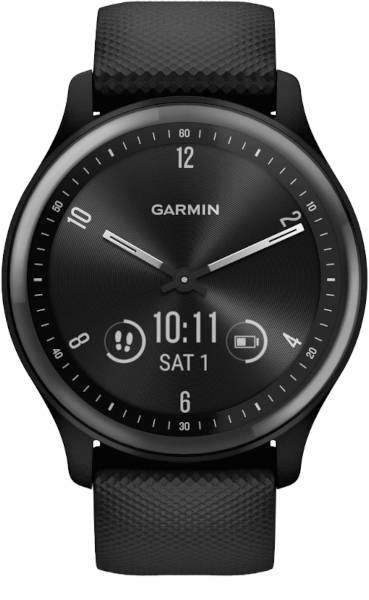
The Garmin vívomove Trend is a true hybrid watch, combining physical analog hands with a hidden touchscreen display that only appears when activated. Unlike full smartwatches, it preserves a traditional dial appearance while delivering heart rate tracking, activity monitoring, sleep analysis, and smartphone notifications through Garmin’s established health ecosystem.
Positioning:
Fitness-focused hybrid with discreet smart integration.
Strengths:
- Accurate health and activity tracking
- Hidden touchscreen that maintains analog aesthetics
- Clean, modern design suitable for daily wear
- Supported by Garmin’s strong app ecosystem
Weaknesses:
- Battery life (around 5 days in connected mode) is shorter than many quartz-based hybrids
- More health-oriented than horology-focused
- Digital interaction remains screen-based, even if subtle
| Store | Link |
|---|---|
| Amazon | Check it out on Amazon |
| Ebay | Check it out on Ebay |
Compared with the Citizen CZ Smart Hybrid:
While both qualify as hybrid watches, the Garmin vívomove Trend prioritizes fitness accuracy and ecosystem depth, making it better suited for health-conscious users. The Citizen CZ Smart Hybrid, by contrast, leans more heavily into traditional watch design and brand heritage, appealing to buyers who want connected features without losing the feel of a classic timepiece.
Best Mid-Range Hybrid Watches ($500–$2000)
As budgets increase, expectations shift. Buyers begin demanding stronger materials, improved durability, and technology that feels purpose-built rather than experimental.
One of the most compelling options in this segment is the Tissot T-Touch Connect Solar.
Tissot T-Touch Connect Solar
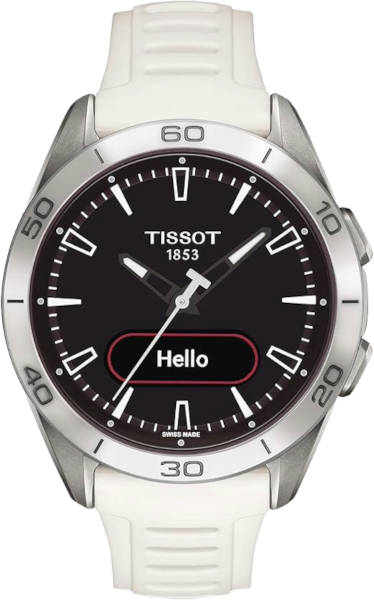
The Tissot T-Touch Connect Solar combines Swiss watchmaking credibility with connected functionality powered by solar energy. Unlike many hybrid watches that prioritize minimalism, this model embraces its identity as a modern tool watch.
It features tactile pushers, a sapphire crystal, and a discreet digital display integrated beneath the analog hands. The solar charging system dramatically reduces charging frequency, offering months of autonomy depending on usage.
Positioning:
Swiss sport-luxury hybrid built for durability and long-term practicality.
Strengths:
- Solar-powered system with extended battery life
- Swiss-made construction and brand heritage
- Sapphire crystal and robust case materials (often titanium)
- Outdoor-focused features including activity tracking and altimeter/barometer functions
Weaknesses:
- Larger case size may not suit all wrists
- Sporty aesthetic less versatile for formal wear
- Smart ecosystem is more limited than full smartwatches
| Store | Link |
|---|---|
| Amazon | Check it out on Amazon |
| Ebay | Check it out on Ebay |
Unlike minimalist hybrid watches, the T-Touch Connect Solar does not try to hide its technical character. It feels like a traditional Swiss tool watch enhanced with digital capability rather than a smartwatch disguised as analog.
For buyers who want connected features without sacrificing brand legitimacy or build quality, this model offers a persuasive middle ground.
At this level, hybrid watches begin to prioritize construction, autonomy, and brand authority — not just app-based functionality.
Luxury Hybrid Watches (Above $2,000)
Once prices exceed $2,000, the expectations change dramatically. Buyers are no longer just looking for convenience. They expect horological credibility.
Few brands operate convincingly in this niche, but Frederique Constant offers one of the most serious entries.
Frederique Constant Hybrid Manufacture
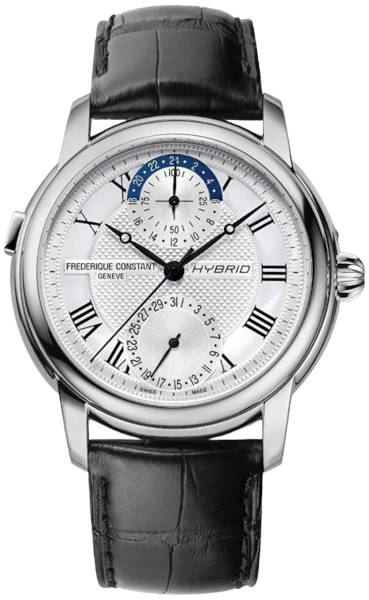
The Frederique Constant Hybrid Manufacture integrates an in-house mechanical movement with a smart module that tracks activity and provides analytics through a companion app.
Positioning:
Traditional Swiss watchmaking enhanced with subtle connected features.
Strengths:
- Manufacture mechanical movement
- Classical finishing and case proportions
- Activity tracking without visible digital compromise
- Strong brand heritage
Weaknesses:
- High price relative to tech capability
- App dependency may impact long-term relevance
| Store | Link |
|---|---|
| Ebay | Check it out on Ebay |
This is not a gadget disguised as a watch. It is a mechanical watch enhanced with connected functionality.
However, buyers must consider a critical question: are they purchasing for technology or for craftsmanship? At this level, the smart features are secondary to the horology.
Luxury hybrid watches appeal to collectors curious about wearable integration but unwilling to abandon traditional watchmaking.
Price tiers alone do not determine satisfaction. A $250 hybrid may deliver exactly what one buyer needs, while a $2,500 model may feel unnecessary to another.
The real difference emerges in daily ownership — how these watches behave on the wrist, how often you charge them, and whether the smart features genuinely enhance your routine.
That is where hybrid watches either prove their value — or reveal their compromises.
What It’s Actually Like to Live With a Hybrid Watch
Specifications tell only part of the story. The real value of hybrid watches becomes clear after several weeks of daily wear.
The first noticeable advantage is battery freedom. Moving from a smartwatch that requires nightly charging to a hybrid that lasts weeks — or even months — changes the ownership experience. You stop thinking about power levels. The watch simply becomes part of your routine.
Notifications, delivered through subtle vibrations or small display elements, feel less intrusive than on full smartwatches. Instead of reading entire messages on your wrist, you receive a gentle cue to check your phone. For many professionals, this reduces distraction while still preserving awareness.
On the wrist, hybrid watches generally feel closer to traditional timepieces than to gadgets. They are thinner than most smartwatches, lighter, and visually appropriate in formal settings. In business environments, this matters.
However, compromises exist.
App ecosystems are critical. Because hybrid watches depend on smartphone integration, long-term usability relies on software support. If a manufacturer discontinues updates, certain features may degrade over time. This is an important consideration when comparing hybrid vs mechanical watch ownership — mechanical timepieces are largely immune to digital obsolescence.
Health tracking accuracy also varies. While mid-range and premium models offer impressive sensors, hybrid watches are rarely as data-rich as dedicated fitness watches.
Living with a hybrid watch ultimately feels like choosing restraint. You gain convenience, but you avoid constant digital engagement.
Are Hybrid Watches Worth It?
The answer depends entirely on expectations.
If your primary goal is advanced fitness tracking with GPS mapping, voice assistants, and app ecosystems, a full smartwatch remains the better tool.
If your priority is craftsmanship, mechanical artistry, and long-term collectability, a traditional mechanical watch offers deeper satisfaction.
Hybrid watches occupy the middle ground.
They are worth it for buyers who:
- Want essential notifications without screen dominance
- Prefer analog design over digital interfaces
- Value extended battery life
- Seek health tracking without wearing obvious technology
In the ongoing hybrid watch vs smartwatch debate, the key distinction is intensity. Smartwatches demand engagement. Hybrid watches provide support.
From a resale perspective, hybrids do not typically hold value like mechanical watches. They are lifestyle products rather than investment pieces. Buyers should view them as practical tools with aesthetic appeal — not as future collectibles.
Yet for many wearers, that balance is precisely the appeal.
How to Choose the Right Hybrid Watch
Selecting the best hybrid watch requires clarity about your priorities.
1. Budget
Entry-level models under $500 deliver strong functionality but modest materials. Mid-range options improve build quality and health features. Luxury hybrids prioritize craftsmanship over technical depth.
2. Health Tracking Needs
If ECG, blood oxygen monitoring, or advanced metrics matter, focus on brands with proven medical-grade integration. If basic step tracking is sufficient, affordable models perform well.
3. Design Preference
Some hybrids lean sporty. Others resemble classic dress watches. Because aesthetics are central to the category, choose a design you would wear even without smart features.
4. Battery Expectations
Battery life ranges from five days to several months. Consider whether you are comfortable charging weekly or prefer near-forgettable power cycles.
5. Brand Stability
Since hybrid watches depend on companion apps, brand longevity matters. Established companies with ongoing wearable ecosystems reduce long-term risk.
When evaluating hybrid watches, it helps to remember that they are designed to simplify your digital life — not expand it.
Final Thoughts: The Quiet Future of Wearables
Hybrid watches do not generate the excitement of flagship smartwatches, nor do they command the reverence of high-end mechanical pieces.
Instead, they offer something subtler.
They acknowledge that many people want connectivity without constant engagement. They recognize that a watch can still look like a watch while quietly integrating modern capability.
As wearable technology matures, the appeal of balance becomes stronger. Not every wrist needs a screen. Not every timepiece needs to reject technology entirely.
Hybrid watches may never dominate the market, but for the right buyer, they represent a thoughtful compromise — one that respects both tradition and practicality.